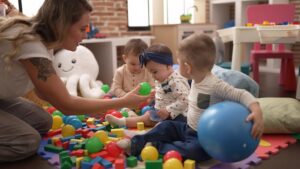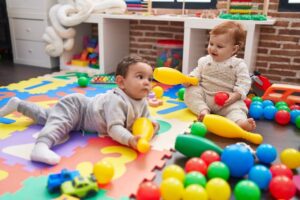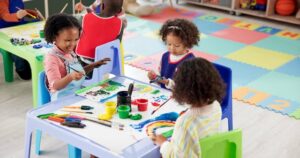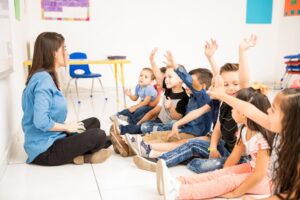
Watch a group of three-year-olds at play. They stack blocks, pour water, and invent stories. It looks like pure fun. It is also serious learning. Play is the main way young children make sense of the world. This guide shows you what children gain from play and how you can support it at home.
Why Play Matters in Preschool
Play is not a break from learning. It is how learning happens at this age. When children play, they test ideas, solve problems, and practice new words. The National Association for the Education of Young Children supports play-based learning as a sound approach for early childhood. The American Academy of Pediatrics also stresses that play builds healthy brain development and strong relationships. A quality preschool program uses play on purpose. Teachers set up the room, ask smart questions, and guide children toward new skills.
Types of Play and the Skills They Build
Children play in many ways. Each type builds different skills. A strong preschool day includes a mix of all of them.
Block and Building Play
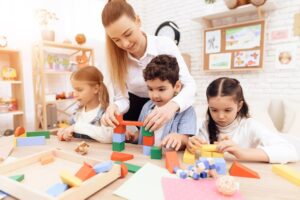
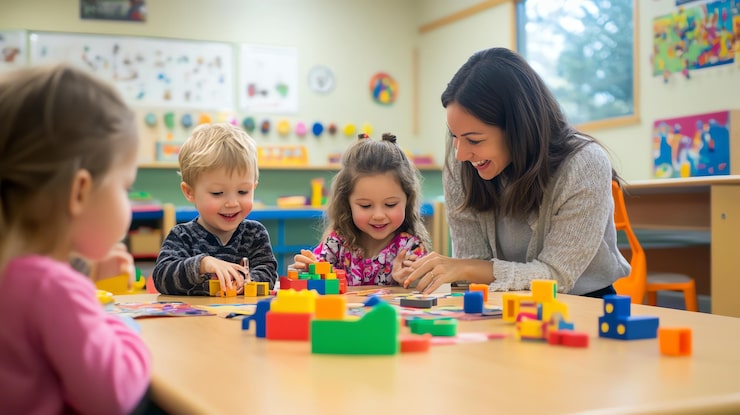
Blocks teach early math and engineering. Children learn about balance, size, shape, and cause and effect. When a tower falls, they try again. That builds patience and problem solving. Ask, “How can we make it taller?” and let your child test ideas.
Pretend Play
Dress-up, kitchen play, and puppet shows build language and empathy. Children take on roles and see the world through another view. They also practice real-life situations, like going to the doctor. Join in for a few minutes. Follow your child’s lead and add new words along the way.
Sensory Play
Water, sand, playdough, and rice bins build fine motor skills. They also support science thinking. Children notice what floats, what sinks, and what feels rough or smooth. Sensory play can calm busy minds, too. Keep a simple bin at home with scoops and cups.
Art and Music Play
Painting, drawing, singing, and dancing build creativity and self-expression. Cutting and gluing strengthen the small muscles needed for writing. Songs teach rhythm, memory, and early literacy. Focus on the process, not the product. A messy painting is a win.
Active and Outdoor Play
Running, climbing, and jumping build strength and coordination. Outdoor play also helps children manage big energy and feelings. Families near Hudson Street can use nearby parks and the Hoboken waterfront for fresh air and movement. Make outdoor time a daily habit.
How Play Builds Key Skills
Play connects to the skills children need for kindergarten and beyond. Here is what you can expect.
- Language: Children learn new words through stories, songs, and pretend talk.
- Early math: Sorting, counting, and comparing happen naturally during play.
- Social skills: Children practice sharing, taking turns, and solving conflicts.
- Emotional skills: Play helps children name feelings and calm down.
- Motor skills: Climbing, drawing, and building strengthen big and small muscles.
- Focus: Children learn to stay with a task they enjoy.
For example, a simple game of “restaurant” covers a lot. Your child counts plates, uses polite words, and waits for a turn. No worksheet needed. This is why a good preschool classroom can look playful and still follow state learning standards.
What a Play-Based Preschool Classroom Looks Like
You can spot quality play when you visit. Look for these signs:
- Defined learning centers, such as blocks, art, books, and pretend play.
- Open-ended materials, like blocks, clay, and natural items.
- Teachers who sit with children and ask questions.
- Children who choose activities and stay engaged.
- A calm, busy hum rather than chaos or silence.
Ask how teachers plan play around a theme or goal. Good programs link play to early literacy, math, and social growth. At our Monroe Street and Hudson Street locations in Hoboken, teachers shape each activity to fit the children in the room. Ask any school how it tracks progress, too.
Simple Ways to Support Play at Home
You do not need fancy toys. Simple items work best. Try these ideas:
- Offer open-ended toys like blocks, boxes, and scarves.
- Set aside a daily block of unplugged playtime.
- Follow your child’s lead instead of directing the game.
- Ask open questions such as “What happens next?”
- Limit screens and choose shows with a clear learning goal.
- Take play outside, even on cool days.
Resist the urge to fix every problem. When children struggle a little, they learn. Step in only when they need help. Praise effort with words like “You kept trying.” Talk about what your child builds or draws. That talk grows language and confidence.
Play and School Readiness
Some parents worry that play will not prepare their child for kindergarten. The opposite is true. Children who play well often show stronger focus, language, and social skills. They also learn to love learning. The New Jersey Department of Education offers early learning resources for families who want to understand state expectations. A good preschool blends play with early letters, numbers, and routines. That mix gives children a strong foundation without pressure.
Take the Next Step
Seeing play in action is the best way to understand it. At The Step by Step School, we offer a warm, play-based preschool program in Hoboken for children ages 3 to 4. Our teachers guide each child with patience, one step at a time. Visit our Hudson Street or Monroe Street location and watch learning come alive. Schedule a tour today and see where your child’s future begins.
Frequently Asked Questions About Preschool
1. Is play-based learning enough to prepare my child for kindergarten?
Yes, when a program plans it with care. Play builds language, early math, focus, and social skills. A strong preschool also adds short, hands-on lessons on letters, numbers, and routines. Children learn these skills in a natural way. Ask each school how it connects play to kindergarten readiness.
2. How much play should a preschool day include?
Most quality programs give children long blocks of free play each day. These often include indoor centers and outdoor time. Short group lessons, like circle time, fit around them. Ask any preschool for a sample daily schedule. Look for a balance of play, rest, meals, and teacher-led learning.
3. What toys are best for preschoolers?
Open-ended toys offer the most value. Blocks, playdough, art supplies, puzzles, and dress-up items let children use imagination. These toys grow with your child. Battery-powered toys often limit creativity because they do one thing. Rotate a small set of toys to keep play fresh.
4. How can I tell if a preschool uses play well?
Visit during the day and watch. Teachers should join play, ask questions, and guide learning. Children should choose activities and stay engaged. Look for learning centers and open-ended materials. Ask staff how they plan activities and track progress.
5. How can I find a play-based preschool in Hoboken?
Start with a tour. Watch how teachers talk to children and how children move through the room. Ask about daily schedules, outdoor time, and parent updates. Families near Hudson Street and Monroe Street can visit our two locations and compare how each preschool classroom supports learning through play.
Note: the internal links currently point to your homepage, so swap in your real tour or contact page URLs. Please also confirm the external links still work before publishing.