Every parent wants to give their child a strong start. So when you tour a school, it is easy to wonder which approach is best. Should your three-year-old be tracing letters, or should they be building towers and playing pretend? The answer is less either-or than it sounds. The best early learning blends both, and it begins with understanding how young children grow. Here is a clear, friendly guide for Hoboken families.
What Is Play-Based Learning in Preschool?
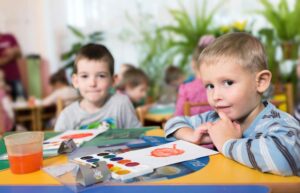
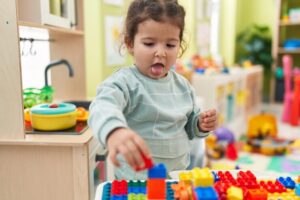
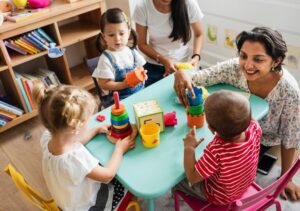
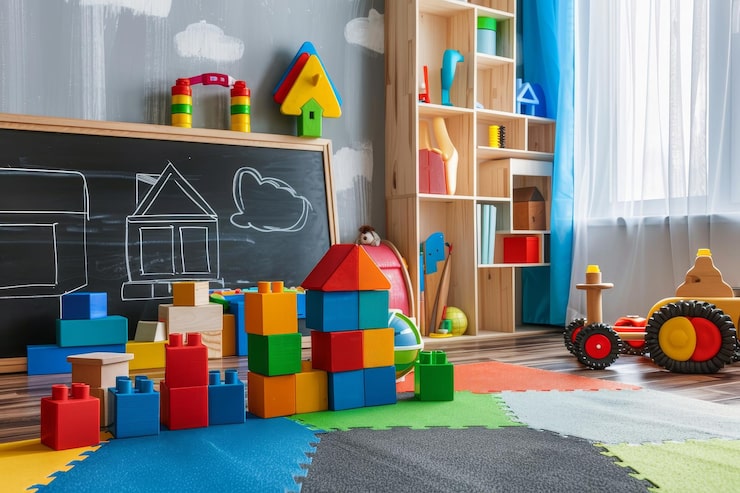
Play-based learning means children explore ideas through hands-on activity. They stack blocks, pour water, paint, sing, and act out stories. It may look like fun, and it is, but real learning is happening underneath. A child who builds a ramp for toy cars is testing cause and effect. A child who plays “store” is practicing math, language, and teamwork. The National Association for the Education of Young Children supports developmentally appropriate practice, which puts play at the center of early learning. In a quality preschool, teachers plan this play with care and guide it with questions.
What Do “Academics” Mean for a 3-Year-Old?
Early academics usually mean skills like letter recognition, counting, shapes, colors, and listening to stories. These skills matter. They help children get ready for kindergarten. The key question is how they are taught. Worksheets and long lessons can be too much for a child who is still learning to sit for a short story. Short, playful activities work far better at this age. Many families feel pressure to push early reading, yet a gentle approach often builds stronger habits and more confidence.
Play-Based Learning vs. Academics: The Real Difference
The real difference is the method, not the goal. Both approaches want children to learn letters, numbers, and language. Academic-heavy programs tend to use direct teaching, repetition, and paper tasks. Play-based programs use exploration, conversation, and real objects. Research summarized by the American Academy of Pediatrics shows that play supports language, problem-solving, and social-emotional growth. Children also remember more when they are curious and relaxed. That is why many early childhood experts favor a balanced preschool classroom over a purely academic one.
What Your 3-Year-Old Actually Needs
At three, children are busy building the foundation for everything that comes later. Here are the core needs to look for.
Time to Move and Explore
Three-year-olds learn with their whole bodies. They need to run, climb, jump, and squeeze through tunnels. Movement builds strength, balance, and coordination, which later support writing. Look for a preschool with daily outdoor play. Families can add to this with trips to Church Square Park, Pier A Park, or a walk along the Hoboken waterfront.
Language-Rich Conversations
Talking is the best early reading lesson. Ask open questions like “What do you think happens next?” Read together every day, and let your child turn the pages. The Centers for Disease Control and Prevention offers free milestone checklists that show typical language skills at each age. Songs, rhymes, and silly stories all count. They build vocabulary and a love of books.
Social and Emotional Skills
Learning to share, wait, and name feelings is a huge job at this age. Pretend play and group activities give children lots of practice. Teachers can model kind words and calm-down strategies. These skills predict success in school as much as early letter knowledge. A child who feels safe and understood is ready to learn.
Gentle, Meaningful Early Skills
Counting snacks, sorting colors, and spotting the first letter of a name are all early academics. They fit naturally into a playful day. The best preschool programs weave them into everyday activities rather than separating them from play. This keeps learning joyful and pressure-free.
How to Tell if a Preschool Gets the Balance Right
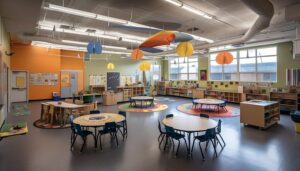
A tour tells you more than any brochure. Watch the children first. Are they engaged, curious, and comfortable? Then listen to the teachers. Do they ask questions and respond warmly? Look at the walls for children’s own artwork rather than identical crafts. Ask how the program meets New Jersey early learning standards, which you can review through the New Jersey Department of Education. Finally, ask how teachers adapt activities for children who learn at different speeds.
At The Step by Step School, our curriculum uses a multi-theory pathway with multi-sensory strategies, aligned with local and New Jersey standards. Children learn at their own pace, supported by caring teachers. You can read more about our preschool program for ages three and four, or explore our approach to learning.
Easy Ways to Support Learning Through Play at Home
You do not need fancy toys. Cardboard boxes, wooden spoons, and crayons are plenty. Try these simple ideas:
- Bake together and count the scoops.
- Go on a shape hunt around your Hoboken apartment or neighborhood.
- Read the same favorite book again and again.
- Build a fort and tell a story about who lives inside.
- Let your child “help” with chores like sorting laundry by color.
Keep sessions short and follow your child’s lead. When they lose interest, move on. Play should feel like play, not a lesson. These small moments add up and make the transition to preschool smoother.
Visit Step by Step and See Learning in Action
Reading about play-based learning is helpful, but seeing it is better. Our friendly team would love to show you our classrooms at our Hudson Street or Monroe Street school. You can schedule a tour to watch real learning unfold. Browse our Frequently Asked Questions, then contact us with any questions. When you are ready, our registration page makes enrolling simple. Come discover where your child’s next step begins.
Frequently Asked Questions About Preschool
1. Is play-based learning enough to prepare my child for kindergarten?
Yes, when it is done well. Quality play-based programs build language, early math, social skills, and focus, which are the real foundations for kindergarten. Teachers also introduce letters, numbers, and shapes in playful ways. Children who enjoy learning tend to carry that attitude forward. A good preschool will happily explain how its activities connect to kindergarten readiness.
2. Should my 3-year-old be reading or writing yet?
Most three-year-olds are not ready for formal reading or writing, and that is perfectly normal. At this age, children are learning to hold crayons, recognize their name, and enjoy books. These are early steps toward literacy. Pushing too hard can create stress. If you have questions about your child’s development, talk with your pediatrician or review the CDC milestone checklists.
3. How can I tell if my child is getting enough learning in a play-based preschool?
Look for signs of growth over time. Does your child use new words, count objects, or tell stories about their day? Do they show interest in books and letters? Ask the teacher for examples of what your child is working on. A strong preschool shares progress through regular conversations and updates, so you always know what is happening.
4. What does a play-based preschool day look like?
A typical day includes free play, circle time, snack, outdoor play, rest, and hands-on centers like art, blocks, and sensory bins. Teachers guide activities with questions and gentle challenges. Learning is woven through each part of the day. Schedules vary by school and age group, so ask for details during a tour.
5. How do I choose between a play-based and an academic preschool in Hoboken?
Start by visiting both types of classrooms. Notice whether children look happy, curious, and engaged. Ask how teachers support different learning styles and how they share progress with families. Many of the best programs combine play with light, age-appropriate academics. Trust your instincts about which environment feels warm and right for your child.