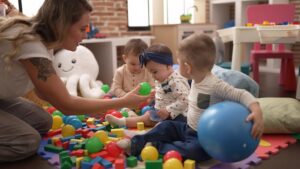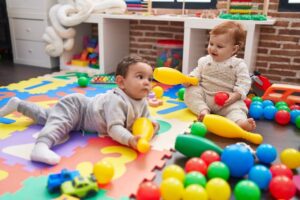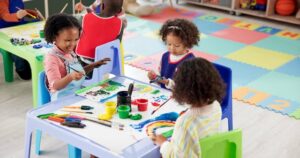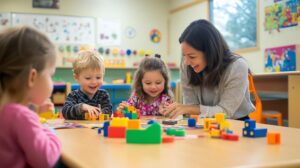
Many parents ask if their child will learn letters and numbers. That matters. But something else matters just as much. Children also learn how to make friends, share, wait, and handle big feelings. These social-emotional skills shape how your child learns, plays, and grows. This guide shows you what they are, how they develop, and how you can help at home.
What Are Social-Emotional Skills in Preschool?
Social-emotional skills help children understand themselves and get along with others. They include naming feelings, managing emotions, showing kindness, and building friendships. Young children are still learning all of this. They need practice, patience, and warm guidance. A strong preschool gives them daily chances to build these skills in a safe space. The CDC lists social and emotional milestones for each age, so you can see what is typical for your child. The National Association for the Education of Young Children also stresses that warm relationships are central to early learning.
Why These Skills Matter
Social-emotional skills support nearly everything else. A child who can calm down can focus on a story. A child who can take turns can join a group game. A child who can ask for help can keep learning when things get hard. These habits carry into kindergarten and beyond. Research on early childhood often links strong social-emotional skills with better focus and smoother school transitions. You do not need to push. You need to give your child steady chances to practice.
Six Social-Emotional Skills Your Child Will Build
Sharing and Taking Turns
Sharing is hard for three-year-olds. That is normal. In preschool, teachers use timers, simple rules, and kind words to help. Children learn that waiting is not losing. They also learn that turns come back around. At home, practice with board games or snack time. Say, “First you, then me.”
Naming and Managing Feelings
Children cannot manage feelings they cannot name. Teachers use words like happy, mad, sad, and frustrated all day long. They also teach calming tools, such as deep breaths or a quiet corner. Over time, children learn to pause before they react. Try this at home. Say, “You look upset. Do you want a hug or some space?”
Making Friends
Friendship starts with small steps. A child watches, plays nearby, then joins in. Teachers help by pairing children, introducing games, and modeling kind words. Your child learns to say “Can I play too?” Practice with playdates at a park near home. Keep them short and simple.
Showing Empathy
Empathy means noticing how others feel. Teachers point it out in real moments. “Look, Mia is sad. What can we do to help?” Children begin to care and respond. Read books together and ask, “How do you think she feels?” Model kindness yourself, because children copy what they see.
Solving Problems Together
Conflicts happen every day in a classroom. Teachers coach children to use words instead of grabbing or hitting. They guide them to find fair solutions. Your child learns to say “Stop, I do not like that.” Step back at home when you can. Let your child try to solve small problems first.
Building Independence and Confidence
Children gain pride when they do things alone. They hang up coats, pour water, and clean up toys. Each small win builds confidence. Teachers cheer effort, not just results. At home, give your child small jobs, like setting out napkins. Say, “You worked hard on that.”
How Preschool Teachers Build These Skills
Teachers weave social-emotional learning into the whole day. It is not a separate lesson. It happens at circle time, during play, at lunch, and at cleanup. Good teachers stay close and watch for teachable moments. They use short, calm phrases that children can remember. They also set clear routines, because predictable days help children feel secure.
Here is what that looks like in a quality classroom:
- Teachers greet each child by name every morning.
- Classroom rules are simple and positive.
- Children use feelings charts or calm-down corners.
- Teachers coach children through conflicts instead of punishing them.
- Group activities build teamwork and listening.
- Teachers praise effort and kindness, not just success.
At our Hudson Street and Monroe Street locations in Hoboken, teachers build these habits into each day.
How to Support Social-Emotional Growth at Home
Your home is a training ground too. Small habits make a big difference. Try these ideas:
- Name feelings out loud, yours and your child’s.
- Keep daily routines steady for meals, play, and bedtime.
- Praise specific actions, such as “You shared your truck.”
- Give your child choices, like “Red cup or blue cup?”
- Stay calm during meltdowns, then talk when the storm passes.
- Read stories about feelings and friendship.
Remember that every child grows at a different pace. Some children warm up fast. Others need time. Avoid comparing your child to others. Notice progress, even when it is small. If you worry about your child’s behavior or development, talk with your pediatrician. The American Academy of Pediatrics offers helpful parent guidance on emotions and behavior.
Finding a Preschool That Values Social-Emotional Learning
Look beyond the alphabet charts. Ask how teachers handle conflict and big emotions. Ask how they teach sharing, kindness, and self-control. Watch how adults speak to children during your visit. The best preschool teachers stay calm, kind, and clear. You can also review early learning guidance from the New Jersey Department of Education to see how the state describes social and emotional goals. Families near Hudson Street and Monroe Street can visit and compare classrooms in person.
Take the Next Step
Academic skills matter, but character and confidence matter too. At The Step by Step School, we offer a warm, nurturing preschool program in Hoboken for children ages 3 to 4. Our teachers guide each child with patience, one step at a time. Visit our Hudson Street or Monroe Street location and see how your child can grow. Schedule a tour today and see where your child’s future begins.
Frequently Asked Questions About Preschool
1. What are social-emotional skills in preschool?
They are the skills that help children manage feelings and get along with others. Examples include sharing, taking turns, showing empathy, and calming down when upset. Children learn them through play, stories, and daily routines. Teachers guide children with simple words and steady support. These skills lay the groundwork for success in kindergarten.
2. How do I know if my child is developing healthy social-emotional skills?
Look for steady progress, not perfection. Your child may show interest in peers, name some feelings, and recover after upsets. Tantrums and conflicts are normal at this age. Check the CDC milestone checklists for guidance. If you have concerns, talk with your pediatrician or your child’s preschool teacher.
3. What if my child struggles to share or make friends?
This is common, especially at ages 3 and 4. Friendship skills take practice. Teachers can model words, set up small group play, and coach turn taking. At home, try short playdates and simple games. Praise any kind move, even a small one. Share your concerns with your preschool teacher so you can work as a team.
4. How can I help my child handle big emotions?
Stay calm and name the feeling. Say, “You are angry because the tower fell.” Offer a hug, a deep breath, or a quiet spot. Talk about solutions after your child settles. Teach simple calming tools, like blowing bubbles with slow breaths. Repeat these steps often, since children learn through repetition.
5. How can I find a preschool in Hoboken that supports social-emotional growth?
Visit in person and watch how teachers talk to children. Ask how they handle conflict, teach sharing, and support big feelings. Look for calm classrooms and warm, steady adults. Families near Hudson Street and Monroe Street can tour our two locations and compare how each preschool classroom builds confidence and kindness.
Note: the internal links currently point to your homepage, so swap in your real tour or contact page URLs. Please also confirm the external links still work before publishing.