lay looks simple from the outside. Blocks stacked, puzzles solved, pretend tea parties served with imaginary sugar. But for young children, play is the primary way they learn about the world. Quality daycare and preschool programs build their curriculum around this idea, and the research backs it up. This guide explains why play-based learning matters so much during the preschool years, and what to look for in a daycare that gets it right.
What Play-Based Learning Actually Means
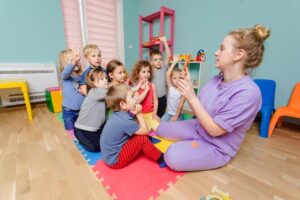
Play-based learning uses structured and unstructured play as the main tool for teaching early skills. Instead of sitting children at desks for worksheets, a strong daycare program builds lessons around hands-on activities like building, sorting, storytelling, and pretend play. According to the National Association for the Education of Young Children, this approach reflects how young children naturally absorb information best.
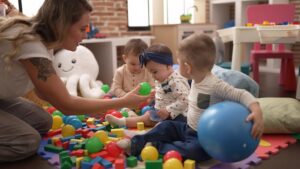
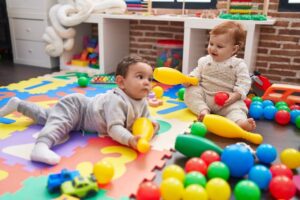
This doesn’t mean play-based daycare lacks structure. Teachers guide activities with specific learning goals in mind, even when the format looks playful. A child stacking blocks isn’t just having fun. They’re also practicing balance, counting, and problem-solving skills, often without realizing they’re learning at all.
Play Builds Cognitive Skills Early
Cognitive development depends heavily on hands-on exploration during the preschool years. When a child sorts shapes by color or builds a tower that keeps falling, they’re testing cause and effect in real time. This kind of trial and error strengthens problem-solving skills far more effectively than passive instruction. A quality daycare uses these everyday moments as teaching opportunities, not just downtime.
Memory and early math concepts also develop through play. Counting blocks, matching patterns, and following multi-step pretend scenarios all reinforce skills children need later in formal schooling. The CDC’s early childhood development resources point to hands-on learning as one of the strongest predictors of school readiness. A daycare that prioritizes this kind of play gives children a real academic advantage, even before formal instruction begins.
Play Strengthens Social and Emotional Growth
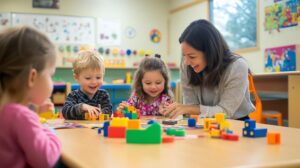
Group play teaches skills that no worksheet can replicate. Sharing toys, taking turns, and negotiating pretend play scenarios all require patience and communication. These moments, often messy and imperfect, teach children how to manage frustration and cooperate with peers. A daycare that encourages open-ended group play gives children daily practice in these exact skills.
Emotional regulation grows through play too. Pretend play often lets children act out big feelings in a safe, low-stakes way. A child pretending to be a frustrated dinosaur is processing real emotions through fantasy. Teachers in a strong daycare setting recognize these moments and gently guide children toward healthier ways to express what they’re feeling.
Play Supports Language and Communication Development
Conversation happens constantly during play. Children narrate their actions, negotiate roles in pretend games, and ask questions about how things work. This natural back-and-forth builds vocabulary far more effectively than rote memorization. A daycare that encourages open dialogue during playtime gives children daily reps in real conversation.
Storytelling through pretend play also builds narrative skills. When children act out a scene, whether it’s a pretend restaurant or a superhero rescue, they’re organizing ideas into a beginning, middle, and end. This skill transfers directly into early literacy, since understanding story structure helps children later when they start reading independently.
Physical Play Builds Motor Skills and Focus
Movement matters just as much as quiet activities. Running, climbing, and balancing build gross motor skills that support everything from posture to handwriting later on. Fine motor skills grow through activities like stacking, drawing, and manipulating small toys. A daycare that balances active and quiet play throughout the day supports both types of development simultaneously.
Physical play also improves focus during structured activities. Children who get regular movement breaks tend to concentrate better during quieter tasks like circle time or storytime. A daycare schedule that includes consistent outdoor or active play isn’t just about burning energy. It’s directly tied to better attention and behavior throughout the rest of the day.
What to Look for in a Play-Based Daycare
Not every daycare approaches play the same way. When evaluating a program, look for specific signs that play is intentional, not just filler time between structured lessons.
- Teachers actively engage with children during play, asking questions and extending ideas
- Materials rotate regularly to keep activities fresh and challenging
- Both quiet and active play are built into the daily schedule
- Outdoor time happens consistently, regardless of weather when possible
- Staff can clearly explain the learning goals behind specific play activities
A daycare that checks these boxes is likely using play intentionally, not just as a way to pass time.
How Play-Based Learning Prepares Children for Preschool
Parents sometimes worry that play-based daycare doesn’t prepare children academically. The opposite is usually true. Children who spend their early years in play-rich environments often enter preschool with stronger problem-solving skills, better emotional regulation, and more confidence in social settings. These foundational skills matter more for long-term success than early memorization of letters or numbers.
Families across Hoboken often see this play-based approach reflected in local daycare programs, especially those with strong outdoor access. Parents near Hudson Street frequently look for daycare options with dedicated outdoor play areas, since active movement supports the physical development piece of this equation. Families closer to Monroe Street often prioritize similar features, recognizing that a well-rounded daycare experience includes both structured learning and genuine, unstructured play.
Frequently Asked Questions
Does play-based daycare prepare children academically for preschool?
Yes. Play-based daycare builds problem-solving, language, and early math skills through hands-on activities. Research consistently shows these foundational skills support long-term academic success.
How much of a daycare day should be dedicated to play?
Most quality daycare programs balance structured activities with significant blocks of open-ended play, often making up the majority of the day for preschool-age children. This balance supports both academic and social development.
Is pretend play actually valuable, or is it just entertainment?
Pretend play holds real developmental value. It builds language skills, emotional regulation, and narrative thinking, all of which support a child’s growth well beyond the daycare years.
How can I tell if my daycare uses play-based learning effectively?
Ask teachers how they connect play to specific learning goals. A strong daycare program can clearly explain the purpose behind activities, even ones that look purely recreational.
Does outdoor play matter as much as indoor play at daycare?
Yes. Outdoor play builds gross motor skills and supports better focus during indoor activities. A daycare with consistent outdoor time offers a more well-rounded developmental experience.
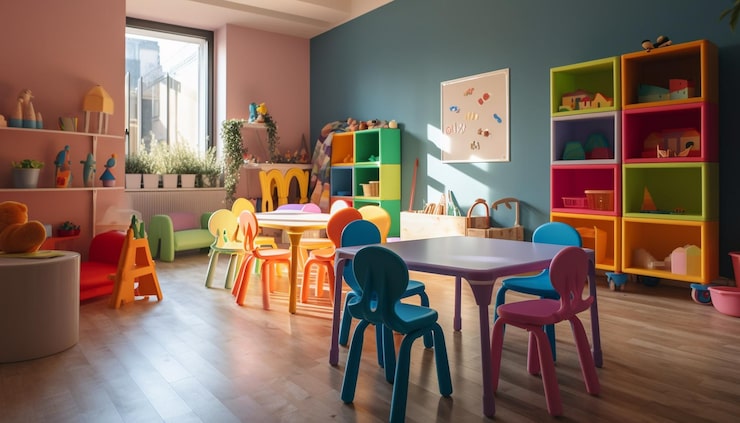
If you want to see play-based learning in action, we’d love to show you around. At The Step by Step School, our daycare and preschool programs at both the Hudson and Monroe locations in Hoboken are built around intentional, hands-on play that supports real developmental growth. Contact us today to ask questions, or schedule a tour to see our classrooms and outdoor spaces firsthand.