
You drop your child off and head to work. Then the questions start. What is your little one doing right now? Is she playing, eating, or napping? A clear picture of the day can ease your mind. This guide walks you through a typical day at a quality daycare for children from 6 weeks to 2.5 years.
Why Routines Matter at Daycare
Young children thrive on predictability. A steady rhythm of meals, play, and rest helps them feel safe. When your child knows what comes next, stress drops. That calm leaves more energy for learning and fun. The Center on the Developing Child at Harvard University explains that warm, responsive care and stable routines support healthy brain growth.
Routines also look different by age. Babies follow their own feeding and sleep cues. Toddlers follow a more set schedule. A good daycare balances both. It keeps a simple flow while it adjusts to each child. The Step by Step School serves children from 6 weeks to 2.5 years in its daycare program, and it lets children learn at their own pace.
Morning Arrival and Warm Welcomes
The day starts at drop-off. Teachers greet each child by name and help families settle in. Most centers ask you to sign your child in, share any news from home, and hand off bottles or medicine. Tell the teacher about sleep, feeding, or mood. Even small details help. A quick note about a rough night can shape the whole day.
Then comes a short, warm goodbye. Keep it simple and loving. Teachers guide your child to a toy, a book, or a friend. Most children settle soon after you leave. If your child struggles, ask the daycare for an update later in the morning. Many teachers gladly share a quick report.
Play and Learning Time
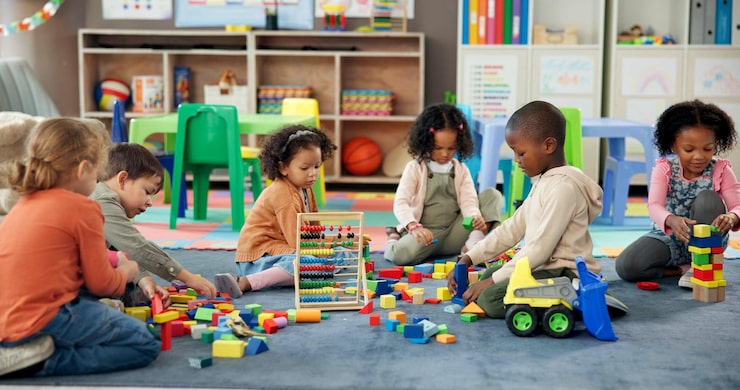
Play is how young children learn. Babies reach, grab, and explore textures. Toddlers stack blocks, scribble, and pretend. Each activity builds skills in movement, language, and thinking. Teachers guide play with songs, simple questions, and new words. They follow your child’s interest and add small challenges.
The Step by Step School uses a multi-theory curriculum aligned with New Jersey standards. It uses multi-sensory activities to match different learning styles. Ask any daycare how its plan supports language, movement, and social skills. Look for a mix of free play and guided activities. The National Association for the Education of Young Children shares clear guidance on what quality play-based learning looks like.
Meals, Snacks, and Diaper Changes
Food and care routines happen throughout the day. Babies eat on their own schedule, often every few hours. Teachers hold infants during bottle feeds, which builds closeness and trust. Toddlers join small groups for snacks and lunch. They practice using cups, spoons, and good table manners. Teachers watch for allergies and follow each family’s feeding wishes.
Diaper changes and potty time also matter. Staff change diapers on a regular schedule and when needed. They wash hands and clean surfaces each time. Ask your daycare about its hygiene and allergy rules. Share your child’s food needs in writing. Clear communication keeps every meal safe and calm.
Nap Time and Safe Sleep
Rest is vital for growing brains. Babies nap several times a day. Toddlers usually nap once, often after lunch. A calm room, soft music, and a steady routine help children settle. Teachers watch sleeping children closely and check on them often.
Safe sleep rules protect infants. The American Academy of Pediatrics advises placing babies on their backs to sleep, on a firm, flat surface, with no soft items. A quality daycare follows these rules every time. Look at the sleep area during your tour. Ask how staff supervise naps. Ask what happens when a child wakes early or sleeps less than usual.
Outdoor Time and Movement
Fresh air and exercise help children grow strong. Babies enjoy tummy time, rolling, and gentle stretches. Toddlers run, climb, and explore. Movement builds balance, coordination, and confidence. It also helps children sleep better at nap time.
Weather and space shape outdoor plans. Hoboken is a busy city, so many centers use nearby parks, playgrounds, and indoor movement areas. Ask your daycare how often children go outside and how staff keep them safe. Pack weather-ready clothes, such as a hat, jacket, or extra socks. Label every item with your child’s name.
Afternoon Activities and Pickup
After naps, children enjoy a snack and quiet activities. Teachers may read stories, sing songs, or set up art and sensory play. Late-day play is often calmer. This helps children wind down before going home. Teachers also record notes about meals, naps, and diapers.
At pickup, ask for a short update. Many parents like to hear about a new word, a funny moment, or a new friend. Ask how the daycare shares daily news, whether by notes, messages, or a quick chat. Share what happens at home too. Teachers can use your tips to support your child. This teamwork builds trust.
Daycare Near You in Hoboken
A good daily routine starts with a smooth commute. The Step by Step School has two Hoboken locations. The Hudson Street school is at 410 Hudson Street. The Monroe Street school is at 720 Monroe Street, C-107. Read about the Hudson location and the Monroe location to see which one fits your route. If you take the PATH train or the ferry, test your trip at rush hour. A short, calm route leaves time for a gentle goodbye.
See a Day at Our Daycare for Yourself
Reading about a day is helpful. Seeing it is better. Schedule a tour at our Hudson or Monroe Street school in Hoboken. Meet our teachers, watch the classrooms in action, and ask your questions. You can also contact us or start your registration today. Your child’s future begins with one step.
Frequently Asked Questions About a Day at Daycare
1. What does a typical day at daycare look like for a baby?
Infants follow their own rhythm. A teacher feeds them when they are hungry, changes diapers often, and lays them down to sleep when they are tired. Between those moments, babies enjoy tummy time, songs, and gentle play. Teachers talk to them throughout the day. A good daycare adjusts to each baby’s cues while keeping a calm, steady flow.
2. How much do toddlers nap at daycare?
Most toddlers take one nap a day, often one to three hours after lunch. Needs vary by child. Some toddlers sleep longer, and others rest quietly. Teachers watch for tired signs and offer a calm space. Share your child’s home sleep habits with the daycare. This helps teachers plan the right rest time.
3. How will I know what my child did at daycare today?
Ask how the daycare shares updates. Many centers use daily notes, messages, or a chat at pickup. Teachers often record meals, naps, diaper changes, and special moments. If you want more detail, ask. A caring daycare welcomes your questions and wants you to feel informed.
4. Do babies and toddlers really learn at daycare?
Yes. Young children learn through play, songs, stories, and daily routines. Teachers add new words, simple challenges, and social moments to each activity. These small steps build language, movement, and social skills. Ask any daycare how its curriculum supports early learning, and look for a balanced, play-based plan.
5. What should I pack for a day at daycare?
Pack extra clothes, diapers, wipes, and any bottles or food your center asks you to bring. Add a weather-ready outfit for outdoor play. Include a small comfort item if the daycare allows it. Label everything with your child’s name. Check your center’s list, since each daycare has its own rules.