Kindergarten feels far away until it does not. One day your child is stacking blocks. The next, you are filling out enrollment forms. Many parents wonder if their child will be ready. The good news is that readiness grows step by step, starting early. This guide shows you how preschool builds the skills your child needs, and how you can help at home.
How Preschool Prepares Your Child for Kindergarten
Kindergarten readiness is about the whole child. It includes language, early math, social skills, and self-control. It also includes a love of learning. A strong preschool program builds all of these through play, stories, songs, and daily routines. Children practice skills in small, steady doses. By the time they turn five, many are comfortable with classroom life. The National Association for the Education of Young Children explains that quality early learning supports later school success. The CDC developmental milestones also show what skills children typically gain by age five.
Skills Your Child Builds in Preschool
Early Language and Literacy
Children learn that words, letters, and sounds carry meaning. Teachers read aloud, sing rhyming songs, and point out letters during play. Your child learns to hold a book, turn pages, and retell a story. Many children also learn to recognize their own name in print. Read together for at least 15 minutes each day. Ask questions like “What do you think happens next?”
Early Math
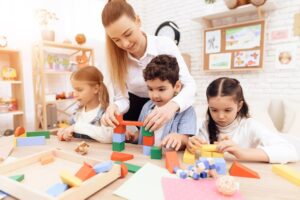
Math starts with everyday life. Children count steps, sort blocks, and compare big and small. They notice patterns in beads, songs, and shapes. A good preschool turns these moments into short, playful lessons. At home, count snacks, set the table, and sort laundry by color. Keep it light and fun.
Fine and Gross Motor Skills
Kindergarten asks children to hold a pencil, use scissors, and sit comfortably. Playdough, puzzles, and drawing build the small muscles in the hand. Running, climbing, and jumping build balance and strength. Both types of movement support focus. Offer your child crayons, chalk, and plenty of outdoor time.
Social and Emotional Skills
These skills matter as much as letters. Children learn to share, wait, listen, and ask for help. They also learn to manage frustration. Teachers guide children through small conflicts with calm words. This practice makes kindergarten feel less scary. A child who can say “I need help” is ready to learn.
Following Routines and Directions
Kindergarten runs on routines. Children line up, clean up, and move between activities. In preschool, they practice these steps every day. They learn to follow two- and three-step directions. Try this at home. Say, “Please put your cup in the sink and wash your hands.”
Independence
Kindergarten teachers expect children to handle basic tasks. These include zipping a coat, opening a lunch box, and using the bathroom alone. Preschool gives your child daily chances to try. Teachers step back and let children struggle a little. Each small win builds confidence. Let your child do things first at home, and help only when needed.
A Kindergarten Readiness Checklist
Use this list as a gentle guide. Every child grows at a different pace, so do not expect to check every box.
- Your child speaks in full sentences and shares ideas.
- Your child follows simple, multi-step directions.
- Your child recognizes some letters, especially in their name.
- Your child counts to 10 and sorts objects.
- Your child holds a crayon and tries to draw or write.
- Your child manages basic bathroom and dressing needs.
- Your child plays with others and takes turns.
- Your child can separate from you with a calm goodbye.
If your child has many of these skills, you are in a good place. If not, do not panic. Skills grow with time, play, and practice.
What Preschool Teachers Do to Prepare Children
Teachers plan with kindergarten in mind. They set clear goals and watch each child’s progress. They adjust activities to fit different learning styles and speeds. Most important, they make learning feel joyful. Children who love school are more likely to keep learning.
You can find the state’s expectations in the New Jersey Department of Education early learning resources. Good programs align lessons with these standards while keeping play at the center. At our Hudson Street and Monroe Street locations in Hoboken, teachers build early literacy, math, and social skills into everyday routines.
Simple Ways to Prepare at Home
Your role matters. Small daily habits add up over months. Try these steps:
- Read aloud every day and visit the library.
- Talk with your child during meals, walks, and car rides.
- Practice name writing with chalk, markers, or finger paint.
- Count objects around the house.
- Keep a steady bedtime and morning routine.
- Give your child small jobs, like feeding a pet.
- Visit the kindergarten if your school offers a tour.
Stay positive when you talk about kindergarten. Say, “You will meet new friends and learn new things.” Avoid pressure or tests. Children learn best when they feel safe and curious. Hoboken families can also use local libraries and parks for story time and play.
When to Ask for Extra Support
Sometimes you notice a delay in speech, behavior, or learning. Do not wait. Early help works best. Talk with your child’s teacher and your pediatrician. They can guide you to screening or support services. The American Academy of Pediatrics offers trusted guidance for parents who have developmental questions. Asking for help is a sign of care, not failure.
Take the Next Step
A strong start shapes the years ahead. At The Step by Step School, we offer a warm, nurturing preschool program in Hoboken for children ages 3 to 4. Our teachers guide each child with patience, one step at a time. Visit our Hudson Street or Monroe Street location and see how we build confidence for kindergarten. Schedule a tour today and see where your child’s future begins.
Frequently Asked Questions About Preschool and Kindergarten
1. Does my child need preschool before kindergarten?
It is not required in most places. Still, many children benefit from it. Preschool gives children early practice with routines, friendships, and learning skills. Children who attend often feel more comfortable in a classroom. Talk with your family and your local school district to decide what fits.
2. What should my child know before starting kindergarten?
Kindergarten teachers look for basic skills, not perfection. Your child should follow simple directions, play with others, and handle basic bathroom needs. Many children also know some letters and can count to 10. Curiosity and a love of learning matter most. Your preschool teacher can share how your child is doing.
3. How early should I start preparing my child for kindergarten?
Start early, but keep it simple. Daily talk, reading, and play already build readiness. In the year before kindergarten, add more practice with routines, writing, and independence. Visit the school if you can. Keep the mood relaxed and positive.
4. Will play-based preschool prepare my child academically?
Yes, when the program plans it well. Play builds language, early math, focus, and problem solving. A good preschool adds short, hands-on lessons on letters and numbers. Children absorb these skills without pressure. Ask schools how they connect play to learning goals.
5. How can I find a preschool in Hoboken that prepares children for kindergarten?
Visit in person and watch the classroom. Ask about daily schedules, learning goals, and how teachers track progress. Look for warm teachers and engaged children. Ask how the school shares updates with parents. Families near Hudson Street and Monroe Street can tour our two locations and compare how each preschool supports kindergarten readiness.
Note: the internal links currently point to your homepage, so swap in your real tour or contact page URLs. Please also confirm the external links still work before publishing.