You drop your child off and wonder what happens next. It is a fair question. A good preschool day follows a steady rhythm that helps young children feel safe and ready to learn. This walkthrough shows you each step, from the first hello to the final goodbye. You will also get simple tips to make the day smoother for your family.
A Typical Preschool Day, Step by Step
Every preschool sets its own schedule. Still, most programs for children ages 3 to 4 follow a similar flow. The day mixes active time with quiet time. It balances teacher-led lessons with free play. Predictable routines help children know what comes next, and that builds confidence. The times below are a sample, so ask any school for its exact schedule.
8:00 to 9:00 AM: Arrival and Settling In
Your day starts at the door. Teachers greet each child by name. Children hang up backpacks, wash hands, and choose a quiet activity like puzzles or books. This gentle start lowers stress for kids who feel nervous at drop-off. At our Hudson Street location in Hoboken, teachers also use this time to share quick updates with parents. Keep your goodbye short and loving. A long goodbye often makes things harder.
9:00 to 10:00 AM: Circle Time and Early Learning
Circle time brings everyone together. Children sing songs, hear a story, and talk about the day’s theme. They practice listening, taking turns, and speaking in front of a group. Teachers also introduce letters, numbers, shapes, and colors in short, playful lessons. A strong preschool program follows state standards while keeping lessons hands-on. The National Association for the Education of Young Children explains that young children learn best through play and real experiences.
10:00 to 11:30 AM: Play, Snack, and Outdoor Time
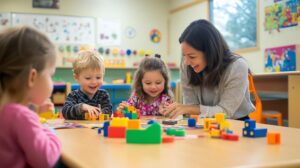
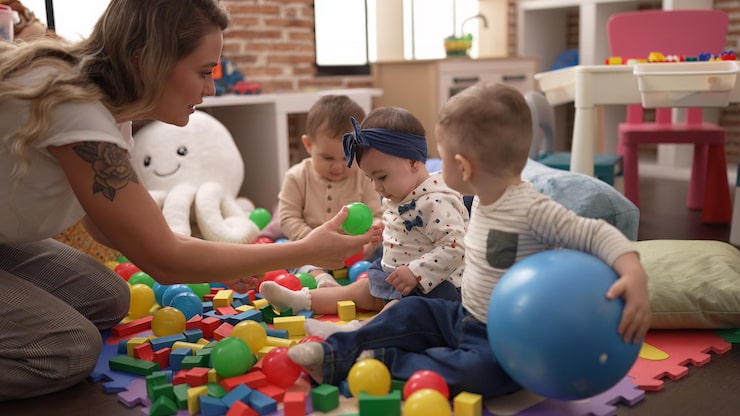
Next comes free play and a healthy snack. Children build with blocks, paint, sort objects, and act out stories. This is real learning, not just fun. Play builds fine motor skills, language, and problem solving. Then children head outside or to a movement space to run, climb, and jump. Families at our Monroe Street location in Hoboken often ask about outdoor time. The answer is simple: movement matters every day.
11:30 AM to 12:30 PM: Lunch and Clean-Up
Lunch teaches more than you think. Children practice using utensils, opening containers, and cleaning up after themselves. They also learn to chat with friends at the table. Teachers watch for allergies and support picky eaters with patience. You can help by packing food your child can open alone. Label every container with your child’s name.
12:30 to 2:30 PM: Rest Time
After lunch, the room goes quiet. Younger children nap, while others rest or enjoy calm activities like drawing. Sleep matters at this age. The American Academy of Pediatrics supports guidance that children ages 3 to 5 need about 10 to 13 hours of sleep in 24 hours, naps included. A steady bedtime at home makes preschool rest time easier. Pack a small blanket or comfort item if the school allows it.
2:30 to 4:00 PM: Afternoon Activities and Pickup
The afternoon brings art, music, science, or another story. Children review their day and get ready for pickup. Teachers often share a short note about what your child did. At pickup, skip “How was your day?” Ask something specific instead, like “Who did you play with today?” or “What did you build?” Specific questions get real answers.
How to Prepare Your Child for a Preschool Day
A little prep goes a long way. Try these simple steps:
- Start the school sleep routine two weeks early.
- Practice handwashing and bathroom habits.
- Read picture books about starting school.
- Visit the classroom before the first day.
- Pack spare clothes and label everything.
Stay calm and positive. Children read your mood. If you feel confident, they will too. Talk about the day in plain words so nothing feels like a surprise. Within a few weeks, most preschoolers settle into the routine and start to look forward to it.
Choosing a Preschool in Hoboken
Not every program looks the same, so visit before you decide. Watch how teachers talk to children. Look for clean, bright rooms and a calm, happy mood. Ask how the school tracks progress. The CDC offers free developmental milestone checklists that help you see what your child can do at each age. You can also review early learning resources from the New Jersey Department of Education. Hoboken parents can compare our two locations on Hudson Street and Monroe Street to find the best fit for their commute.
Take the Next Step
Reading about a day is helpful. Seeing it is better. At The Step by Step School, we offer a safe, warm preschool program in Hoboken for children ages 3 to 4. Our teachers build confidence, social skills, and a love of learning, one step at a time. Visit our Hudson Street or Monroe Street location and watch a real day unfold. Schedule a tour today and see where your child’s future begins.
Frequently Asked Questions About Preschool
1. What age should my child start preschool?
Most children start preschool between ages 3 and 4. The right time depends on your child, not just the calendar. Look for signs like interest in other children, basic communication skills, and the ability to handle short separations. Many children also work toward bathroom independence, though each school sets its own rules. If you feel unsure, a tour and a chat with teachers will help you decide.
2. How long is a typical preschool day?
Programs vary. Some offer half days of about three hours, while others run full days from morning to late afternoon. Full-day schedules usually include circle time, play, lunch, rest, and outdoor activity. Ask about flexible options if your work hours are long. At The Step by Step School, you can ask our team which schedule fits your family at the Hudson or Monroe Street location.
3. What will my child learn in preschool?
Your child will build early literacy, number sense, and fine motor skills. Just as important, they will learn social-emotional skills like sharing, listening, and managing big feelings. Most of this happens through play, songs, stories, and hands-on activities. These skills prepare children for kindergarten and for life. Teachers adjust activities so each child learns at their own pace.
4. How can I help my child adjust to preschool?
Start early and keep routines steady. Visit the classroom, meet the teachers, and read books about school together. Keep drop-off short and cheerful, even if your child cries. Most children calm down within minutes after a parent leaves. Share any worries with teachers, since they can offer tailored support and updates during the day.
5. What should I look for when visiting a preschool in Hoboken?
Watch how teachers interact with children. They should speak kindly, get down to eye level, and respond quickly. Check for safety features, clean spaces, and a daily schedule with a good balance of play and learning. Ask about teacher training, class sizes, and how the school communicates with parents. Visiting both of our Hoboken locations, on Hudson and Monroe Street, gives you a clear sense of what a quality preschool feels like.
A few notes: the internal links currently point to your homepage, so swap in your actual tour or contact page URLs. Please also confirm the external links still resolve before publishing, and check that the sample schedule matches your real daily routine at both locations.