Social-emotional growth doesn’t happen overnight. It builds slowly, through daily interactions, small conflicts, and repeated practice over months and years. A quality daycare plays a major role in this development, since children spend so much of their early years learning alongside peers. This guide breaks down what to expect at each age, so you know what’s typical and what your daycare should be supporting along the way.
Why Social-Emotional Development Matters So Much
Social-emotional skills shape how children manage feelings, build relationships, and handle everyday challenges. According to the CDC’s early childhood development resources, these skills predict long-term outcomes just as strongly as academic ability, sometimes more so. A child who can regulate emotions and communicate needs clearly tends to adjust better to school, friendships, and new environments overall.
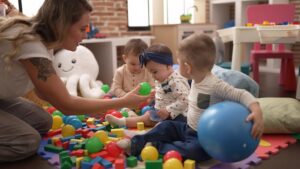
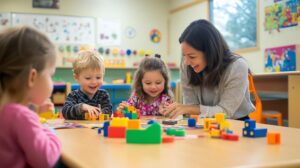
Daycare offers a unique setting for this growth. Unlike home, where a child interacts mainly with family, daycare exposes children to peers, shared resources, and group expectations daily. These small, repeated social moments build skills that simply can’t develop the same way in isolation. A daycare that intentionally supports this growth gives children a real head start.
Infants: Building the Foundation of Trust
Social-emotional development starts earlier than most parents expect. Infants in daycare begin building trust through consistent, responsive caregiving. When a caregiver responds to cries, smiles back, and maintains a predictable routine, infants start learning that their needs matter and that adults can be relied upon. This foundation of trust becomes the base for every social skill that follows.
At this stage, daycare providers focus heavily on attachment and comfort. Skilled caregivers learn each infant’s individual cues, from hunger signals to tired fussiness. A daycare with low infant-to-caregiver ratios supports this kind of responsive care far better than a program stretched too thin. This early attention shapes how securely attached a child feels moving into toddlerhood.
Toddlers: Learning Emotional Expression and Early Boundaries
Between one and three years old, children start expressing bigger emotions with less control. Tantrums, biting, and sudden mood shifts are common and developmentally normal. Daycare teachers at this age focus on naming emotions for children, helping them build the vocabulary to say “I’m frustrated” instead of acting it out physically. This labeling process supports long-term emotional regulation.
Toddlers also begin learning early boundaries during daycare, like taking turns with toys or waiting briefly for attention. These lessons come through repetition, not lectures. A daycare that handles toddler conflicts with patience, rather than punishment, helps children build genuine self-control instead of just temporary compliance out of fear.
Preschoolers: Developing Empathy and Cooperative Play
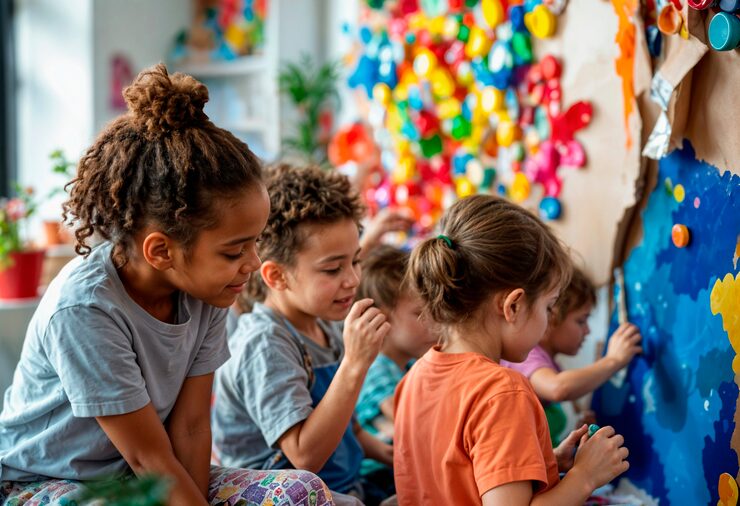
By ages three to five, children start showing real empathy. They notice when a friend is sad and may offer comfort without being prompted. Daycare and preschool programs at this stage often introduce more cooperative games, group projects, and shared responsibilities. The National Association for the Education of Young Children highlights this period as critical for building perspective-taking skills that support lifelong relationships.
Conflict becomes more complex too. Preschoolers argue over rules, roles in pretend play, and fairness in ways toddlers simply can’t articulate yet. A strong daycare program uses these conflicts as teaching moments, guiding children to problem-solve together rather than stepping in to resolve everything immediately. This hands-off coaching builds independence alongside empathy.
School-Age Children: Strengthening Friendship Skills and Self-Identity
Children five and older, often in before and after school daycare programs, focus heavily on friendship dynamics and self-identity. They start comparing themselves to peers, forming closer friendships, and navigating more complex social hierarchies. This age group benefits from daycare staff who model healthy conflict resolution and encourage inclusive group play.
Self-esteem becomes more fragile during this stage too. Children start internalizing feedback from peers and adults in new ways. A daycare that emphasizes effort over outcome, and encourages kids to try new activities without fear of failure, supports healthier self-identity development during these formative years.
Signs Your Child’s Daycare Supports Social-Emotional Growth
Not every daycare prioritizes this area equally. Look for these signs when evaluating a program:
- Teachers actively coach children through conflicts instead of just separating them
- Staff use consistent language to help children name and process emotions
- Group activities are designed to build cooperation, not just compliance
- Caregivers build individual relationships with each child, regardless of group size
- The daycare communicates regularly with parents about social and emotional progress, not just academic milestones
A daycare that checks these boxes is actively investing in this side of your child’s development, not leaving it to chance.
How Parents Can Reinforce This Growth at Home
Daycare plays a major role, but home reinforcement matters too. Talk openly about emotions during everyday moments, not just during conflicts. Ask your child specific questions about their day, like who they played with or what made them feel happy or frustrated. These conversations extend the same emotional coaching your daycare provides.
Model healthy conflict resolution yourself whenever possible. Children absorb far more from watching adults handle disagreements than from any lecture. Consistency between home and daycare creates a stronger, more unified environment for building these skills over time.
Local Programs That Prioritize Whole-Child Development
Families across Hoboken increasingly look for daycare programs that treat social-emotional growth as seriously as academics. Parents near Hudson Street often ask directly about behavior guidance policies during daycare tours, since this reflects how seriously a program takes emotional development. Families closer to Monroe Street frequently raise similar questions, recognizing that a daycare’s approach to conflict and emotional coaching shapes their child’s daily experience far more than curriculum alone.
Frequently Asked Questions
At what age should social-emotional skills start developing at daycare?
Social-emotional development begins in infancy through responsive caregiving. Daycare providers support this from the very first months, long before children can speak or interact independently with peers.
Is it normal for my toddler to have frequent tantrums at daycare?
Yes. Tantrums are a normal part of toddler development as children learn to express big emotions. A quality daycare handles these moments with patience and consistent emotional coaching.
How can I tell if my child’s daycare focuses on social-emotional skills?
Ask how teachers handle conflicts between children and how they communicate emotional progress to parents. A daycare that prioritizes this area will have clear, specific answers.
Does daycare really impact long-term emotional development?
Yes. Consistent, responsive care during the daycare years builds foundational trust and emotional regulation skills that influence relationships and behavior well into later childhood.
What should I do if my child struggles socially at daycare?
Talk to your child’s daycare teacher directly. They can offer specific observations and strategies, and working together often resolves social challenges faster than addressing them at home alone.
If you want a daycare that takes social-emotional development as seriously as academics, we’d love to talk with you. At The Step by Step School, our teachers at both the Hudson and Monroe locations in Hoboken focus on building these skills every day, at every age. Contact us to learn more about our approach, or schedule a tour to see our classrooms in action.