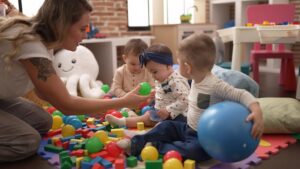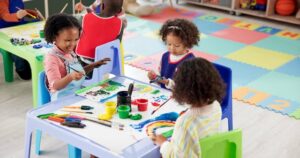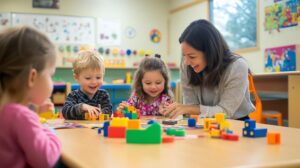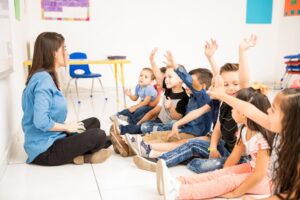
Ask a child what they love most about their afterschool program and they will rarely say homework help. They will tell you about their friends. They will tell you about the project they built, the game they played, the moment something made the whole group laugh. They will tell you about the fun.
And here is the thing that fun is not a distraction from the real value of afterschool care. It is the real value. The friendships formed, the social skills practiced, and the genuine enjoyment children experience during those afternoon hours are among the most important developmental outcomes a quality program can deliver. Parents sometimes need permission to prioritize joy alongside academics. Consider this that permission.
The afternoons matter. Not just because they fill a gap in the schedule, but because of what children are quietly becoming during them.
Why Social Development Is at the Heart of Quality Afterschool Programming
Children spend the school day in a highly structured social environment. They sit where they are told, work with assigned partners, and navigate relationships within a framework designed primarily around academic outcomes. That structure is necessary. But it leaves gaps. Real social learning — the messy, meaningful, sometimes uncomfortable kind — needs room to breathe.
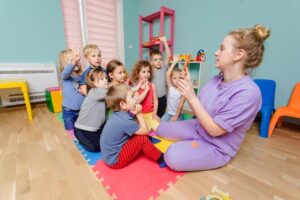
Afterschool programs provide that room. The environment is less formal, the stakes are lower, and children have genuine agency over how they engage with the people around them. They choose who to sit with at snack time. They decide how to contribute to a group activity. They work out what to do when a friend says something that hurts their feelings. These are not trivial moments. They are the building blocks of social intelligence, and they accumulate quietly but powerfully over the course of an afterschool year. According to the Collaborative for Academic, Social, and Emotional Learning, children who develop strong social skills early are significantly more likely to succeed academically, maintain healthy relationships, and demonstrate positive mental health outcomes throughout their lives.
For families in Hoboken near Hudson Street and Monroe Street, quality afterschool programs are embedded in a vibrant, diverse community — and that context makes the social learning even richer. Children are not just learning to get along with people who are exactly like them. They are learning to connect across differences, which is one of the most valuable skills any person can develop.
Friendship Is a Skill, Not Just a Feeling
We tend to think of friendship as something that either happens or does not. You click with someone, or you do not. But the truth is more nuanced than that. Friendship is a skill. It requires knowing how to show interest in another person, how to listen, how to repair things when they go wrong, and how to show up consistently over time. These abilities are learned. And afterschool programs are one of the best places children learn them.
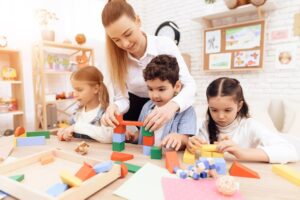
Unlike the classroom, where friendships often form along lines of proximity and assignment, afterschool settings allow children to build connections based on shared interests, shared humor, and genuine mutual enjoyment. A child who loves drawing finds another child who loves drawing. A child who is passionate about building things finds their people at the craft table. These interest-based friendships tend to be deeper and more durable than those formed simply because two children sit next to each other. Research from Child Trends highlights that children with strong peer friendships during the early and middle childhood years demonstrate greater emotional resilience and better mental health outcomes well into adolescence. That is not a small thing to build on an ordinary Tuesday afternoon.
The Serious Work That Happens During Fun
There is a tendency to separate fun from learning, as though the two exist on opposite ends of a spectrum. Quality afterschool programs reject that separation entirely. When children are genuinely engaged in something enjoyable — a team game, a creative project, a group challenge — the learning that happens is often deeper and more lasting than anything achieved through formal instruction.
Collaborative play teaches negotiation. Group games teach children to follow rules and accept outcomes gracefully. Creative projects teach persistence. Even unstructured free play, when it happens in a well-managed afterschool environment, teaches children to regulate their emotions, read social cues, and assert themselves appropriately. The American Academy of Pediatrics has consistently emphasized the developmental importance of play, noting that it supports cognitive flexibility, problem-solving, and social competence in ways that direct instruction alone cannot replicate. A great afterschool program understands this and builds it deliberately into every afternoon.
At The Step by Step School, our afterschool program at both the Hudson and Monroe Street locations in Hoboken is designed with exactly this philosophy in mind. Every activity, every game, every creative session has purpose woven into it — even when it simply looks like children having a wonderful time.
What Social Growth During Afterschool Hours Looks Like at Home
Parents notice it gradually. A child who used to struggle to enter a group conversation starts doing it naturally. A child who fell apart over losing a game begins to shake it off and move on. A child who rarely talked about friends starts coming home full of stories about what someone said or did that made them smile.
These shifts are the visible surface of deep social learning happening during afterschool hours. They do not arrive all at once. They build, week by week, through hundreds of small interactions in an environment designed to support them. Families near Hudson and Monroe Street in Hoboken regularly share these observations with our team — children becoming more communicative, more empathetic, more comfortable in their own skin. That is what genuine social development looks like in practice. And it is what quality afterschool care, done well, consistently produces.
Choosing an Afterschool Program That Prioritizes the Whole Child
Not every afterschool program approaches social development with the same intentionality. When evaluating options for your child, look for programs where educators are genuinely engaged with children rather than simply managing them. Look for environments where children have real choices about how they spend their time. Look for a culture where kindness is modeled, not just expected. And look for a program that sees friendship and fun not as nice extras, but as central to what they are trying to accomplish every afternoon.
At The Step by Step School, we believe that a child who feels connected, valued, and genuinely happy during their afterschool hours is a child who will show up more fully everywhere else in their life. That belief shapes everything we do at our Hudson and Monroe Street locations in Hoboken.
Your child deserves afternoons that are more than just managed. They deserve afternoons that matter. Schedule a tour today and discover what a truly social, joyful, and purposeful afterschool experience looks like for your family.
Frequently Asked Questions About Social Skills and Afterschool Programs
How do afterschool programs help children develop better social skills? Afterschool programs create repeated, low-stakes opportunities for children to practice the full range of social skills in a supported environment. Unlike the classroom, where social interaction is often secondary to academic tasks, afterschool settings are built around collaboration, play, and genuine peer connection. Children learn to communicate their needs, navigate disagreements, take turns, and build relationships through direct experience rather than instruction. Skilled afterschool educators observe these interactions closely and offer gentle guidance when children need support, without removing the natural challenge of figuring things out. Over the course of a full afterschool year, the cumulative effect of these daily social experiences is significant and measurable.
What if my child already has strong social skills — will an afterschool program still benefit them? Absolutely. Even socially confident children benefit enormously from the variety and depth of social experience that a quality afterschool program provides. Strong social skills are not a fixed destination — they continue to develop and become more sophisticated throughout childhood and adolescence. An afterschool program exposes even socially capable children to new peer groups, new collaborative challenges, and new social contexts that stretch their abilities in valuable ways. Leadership skills, empathy, and the ability to navigate complex group dynamics are all areas where even socially confident children can grow significantly within a well-designed afterschool environment.
How does an afterschool program support children who struggle socially? Children who find social situations challenging often make their greatest gains in afterschool settings, precisely because the environment is more relaxed and relationship-centered than the formal classroom. Experienced afterschool educators are skilled at gently facilitating connections between children who might not naturally find each other, and at coaching children through social challenges in real time without making them feel singled out. Consistent attendance is particularly important for socially hesitant children, as the familiarity that builds over weeks and months is what allows them to begin taking social risks. Parents of children who struggle socially should look specifically for afterschool programs with small group sizes, consistent educator relationships, and a stated commitment to social-emotional development as a program priority.
At what age do children benefit most from the social aspects of afterschool programs? The social benefits of afterschool programs are meaningful across a wide age range, from early childhood through early adolescence. For children aged 3 to 6, afterschool provides crucial early practice in parallel and cooperative play, turn-taking, and forming early friendships outside the family unit. For children aged 7 to 10, the social dynamics become more complex and the afterschool environment offers invaluable practice in navigating those dynamics with support. For preteens aged 10 to 13, afterschool programs offer a structured, supervised social environment during a period when peer relationships become especially important and emotionally charged. Each stage brings its own social challenges, and a quality afterschool program is equipped to support children through all of them.
How can parents support and extend the social learning that happens in afterschool programs? Parents play an important complementary role in reinforcing the social skills children practice during afterschool hours. Asking open-ended questions about friendships and interactions — rather than just asking whether the day was good — helps children process and articulate their social experiences. Encouraging playdates with afterschool friends extends those connections beyond the program itself. Modeling the social behaviors you want your child to develop, such as active listening, gracious conflict resolution, and genuine interest in others, reinforces what children are learning in their afterschool environment. And maintaining open communication with afterschool educators about how your child is doing socially ensures that the home and program environments are working in the same direction.