
Most parents have asked it at some point. Is there really a difference between preschool and daycare? And if there is, does it actually matter for my child? These are fair, honest questions. The answer is not as simple as one being better than the other. What matters most is understanding what each option offers, what your child needs right now, and how to find a programme that genuinely supports their growth. The good news is that with the right information, the decision becomes much clearer.
Understanding the Core Difference Between Preschool and Daycare
At its most basic level, daycare is a supervised care environment for children, typically from infancy through the early years. The primary focus is on keeping children safe, nurtured, and happy while parents are at work. Preschool, on the other hand, is a structured early education programme designed specifically to build the skills children need before they enter kindergarten. It follows a curriculum, incorporates intentional learning activities, and focuses on developmental milestones across cognitive, social, emotional, and physical domains. Understanding this distinction helps parents evaluate programmes more clearly, rather than simply choosing based on convenience or cost alone.
What Daycare Does Really Well
Good daycare is genuinely valuable, and it should never be underestimated. For children under three, a warm, responsive, and well-staffed daycare environment provides exactly what young children need most: consistent care, secure attachment, and a safe space to explore the world at their own pace. The National Institute of Child Health and Human Development has found that high-quality childcare in the early years is positively associated with language development and cognitive skills. The key word there is quality. A nurturing daycare that prioritises responsive caregiving and age-appropriate stimulation lays a strong foundation for everything that follows. For families near Hudson Street in Hoboken, finding a daycare that goes beyond basic supervision and genuinely invests in each child’s earliest developmental stages is well worth the search.
What Preschool Adds to the Picture
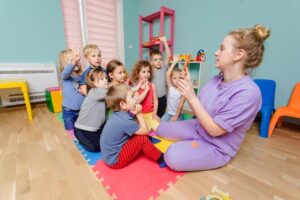
When children reach around three years of age, their capacity for structured learning grows significantly. This is where preschool becomes particularly powerful. A quality preschool programme introduces children to group learning, pre-literacy and numeracy skills, creative expression, and the kind of social interactions that build empathy and communication. According to NIEER, the National Institute for Early Education Research, children who attend high-quality preschool programmes show measurable gains in school readiness compared to those who do not. Preschool also helps children develop self-regulation, the ability to manage emotions and behaviour in a group setting, which is one of the strongest predictors of long-term academic success. These are skills that do not just appear; they need to be actively cultivated in the right environment.
The Overlap Is Greater Than You Think
Here is something many parents do not realise: the best early childhood programmes do not fit neatly into one category. Many exceptional providers blend the warmth and care of a traditional daycare with the structured learning of a preschool curriculum. This integrated approach means children are not choosing between feeling safe and learning actively. They are experiencing both at the same time. At The Step by Step School, programmes spanning daycare through to preschool are all built around the same core belief: that every child deserves personalised care and exceptional learning experiences that meet them where they are. This kind of continuity across age groups is something families on both Hudson Street and Monroe Street in Hoboken have come to rely on.
Why Curriculum Quality Is the Real Differentiator
When comparing programmes, the most important question is not “is this daycare or preschool?” It is “what does the curriculum actually look like?” A structured preschool curriculum should address multiple areas of development simultaneously. Look for programmes that incorporate language-rich activities, problem-solving play, creative arts, physical movement, and explicit social-emotional learning. The Harvard Center on the Developing Child makes clear that the quality of early learning experiences, not the label attached to a programme, is what drives meaningful developmental outcomes. Ask providers to walk you through a typical day. The answer will tell you everything you need to know about whether learning is intentional or incidental.
Social and Emotional Development Sits at the Heart of Both
Whether you are considering daycare or preschool, no factor matters more than how a programme supports social and emotional development. Children who develop strong emotional foundations in their early years are better equipped to handle the challenges of formal schooling and beyond. They build friendships more easily, manage frustration more effectively, and approach new experiences with confidence rather than fear. A great preschool actively teaches these skills through guided play, collaborative activities, and warm, consistent relationships with trusted educators. The American Academy of Pediatrics emphasises that responsive, relationship-based care is the single most powerful driver of healthy child development across all settings.
How to Evaluate Any Programme, Regardless of the Label
When you visit a setting, whether it calls itself a daycare, a preschool, or an early learning centre, there are a few things worth looking at closely. Observe how teachers speak to and interact with children. Are they engaged and warm, or distracted and hurried? Look at the physical environment: is it stimulating, organised, and safe? Ask about the child-to-teacher ratio, staff qualifications, and how the programme communicates with families. A school that welcomes your questions and gives thoughtful, honest answers is demonstrating exactly the kind of culture you want your child to be part of. The Step by Step School invites families to visit and see first-hand how its passionate educators bring this standard to life every single day.
What Hoboken Families Should Know
For families in Hoboken, the decision between daycare and preschool does not have to feel like a compromise. Quality programmes exist that deliver on both fronts without asking you to sacrifice one for the other. Families near the Monroe Street and Hudson Street locations of The Step by Step School have access to a continuum of care that takes children from six weeks all the way through to thirteen years of age. That kind of seamless progression, from nurturing infant care through to a structured preschool curriculum and beyond, means your child builds relationships, routines, and confidence within a community that truly knows them. That consistency is enormously valuable.
The Decision That Shapes Everything
Choosing between preschool and daycare is not about picking the more impressive-sounding option. It is about finding a programme that genuinely fits your child’s developmental stage, your family’s practical needs, and your values as a parent. Both can be excellent. Both can fall short. The difference lies entirely in the quality of the people, the environment, and the intention behind the programme. Take your time, visit in person, and trust what you observe. Your instincts as a parent are one of the most reliable guides you have.
Start Your Journey With Us
At The Step by Step School, we know this decision carries real weight. That is why we have built programmes that blend the very best of nurturing care and intentional early education, from daycare right through to preschool and beyond. Every child who walks through our doors is celebrated for exactly who they are. We would love to show you what that looks like in person. Schedule a tour at our Hudson or Monroe Street location in Hoboken and see for yourself why so many local families trust us with the years that matter most. Contact our team today and let us help you find the right fit for your child.
Frequently Asked Questions
What is the main difference between preschool and daycare?
The main difference lies in purpose and structure. Daycare is primarily focused on providing safe, nurturing supervision for children while parents work, and it typically serves children from infancy onward. Preschool is an education-focused programme built around a structured curriculum designed to prepare children, usually aged three and above, for kindergarten and formal schooling. That said, many high-quality programmes today combine elements of both, offering the warmth and care of a daycare environment alongside the intentional learning of a preschool curriculum. The most important question is not which label a programme carries, but whether it is genuinely investing in your child’s development across all key areas.
Does my child need preschool if they are already in daycare?
Not necessarily, but it depends on the quality and structure of the daycare programme your child is currently in. If your child’s daycare includes intentional learning activities, social-emotional development, and curriculum-based experiences, it may already be delivering much of what a preschool offers. However, if the daycare is primarily focused on supervision and basic care without structured learning, transitioning to a preschool programme around age three can add significant developmental value. Research consistently shows that children who experience structured early education are better prepared for kindergarten, both academically and socially. Speak with your child’s educators and paediatrician to assess whether a change would benefit your child at their current stage.
At what age should a child move from daycare to preschool?
Most children are developmentally ready to benefit from a preschool environment around the age of three. At this stage, children typically have sufficient language skills, social awareness, and emotional capacity to participate meaningfully in a group learning setting. However, the transition does not need to be abrupt. Many programmes, including those at The Step by Step School, offer a natural progression from daycare into preschool within the same trusted environment, which makes the transition much smoother for children and families alike. The most reliable guide is your child’s own readiness, not a fixed age on the calendar.
How do I know if a preschool programme is actually good quality?
Quality in a preschool programme is visible when you visit in person. Look for low child-to-teacher ratios, qualified and experienced staff, and a clearly articulated learning philosophy. Observe how teachers interact with children: are they responsive, warm, and intentional? Ask to see the daily schedule and find out how the curriculum addresses social-emotional development, language, creativity, and early numeracy. Accreditation from organisations such as the National Association for the Education of Young Children is a strong indicator of consistent quality. Positive parent testimonials and low staff turnover are also reliable signals that a preschool is doing things well.
Are there good preschool and daycare options in Hoboken?
Yes, Hoboken has strong options for families seeking quality early childhood education. The Step by Step School operates two locations in Hoboken, one on Hudson Street and one on Monroe Street, offering a full continuum of care from daycare for children as young as six weeks through to preschool, afterschool, and summer camp programmes for children up to thirteen years of age. The school is built around a multi-theory learning approach that supports every child’s unique developmental journey. Families across Hoboken have trusted the school for its passionate educators, modern facilities, and genuine commitment to every child’s growth. You can explore all programmes here or book a tour to see the school for yourself.