
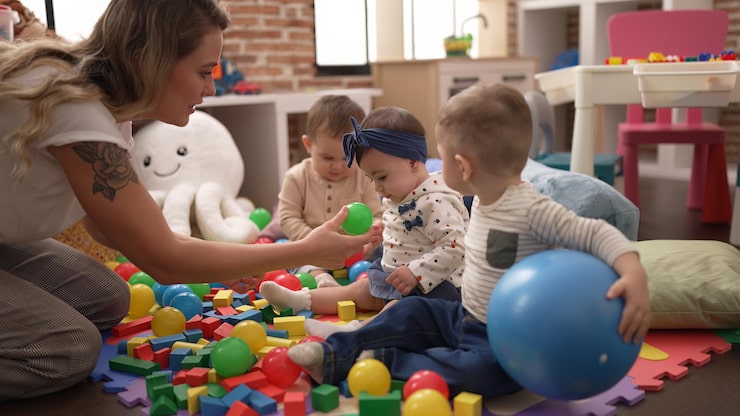
Children thrive on predictability far more than most adults realize. A consistent schedule at daycare does more than keep the day organized. It builds a sense of safety that supports emotional regulation, confidence, and trust. This guide explains why routine matters so much during the early years, and what to look for in a daycare that gets this right.
Why Routine Matters So Much in a Daycare Setting
Young children lack the ability to predict what happens next on their own. A consistent daycare routine fills that gap, giving children a reliable structure they can count on every day. According to the CDC’s early childhood development resources, predictable routines support healthy brain development by reducing stress and helping children feel more in control of their environment.
When children know what comes next, whether that’s snack time, outdoor play, or nap time, they spend less mental energy worrying and more energy engaging with activities around them. A daycare that prioritizes consistency isn’t just being rigid for the sake of structure. It’s actively supporting a child’s sense of security throughout the day.
Routine Reduces Anxiety and Builds Trust
Unpredictability creates stress, even for adults. For young children, an inconsistent daycare schedule can feel genuinely destabilizing. When routines shift constantly, children spend more energy anticipating change instead of relaxing into their environment. A consistent daycare schedule removes this uncertainty, allowing children to trust that their needs will be met in a predictable way.
Trust builds slowly through repetition. When a child experiences the same comforting sequence each day, like a goodbye ritual at drop-off or a consistent nap routine, they begin to internalize that daycare is a safe, dependable place. This trust extends beyond daycare too, often improving a child’s overall sense of security at home and in new situations.
Predictable Schedules Support Emotional Regulation
Big emotions are easier to manage when the surrounding environment feels stable. A structured daycare routine gives children fewer surprises to react to throughout the day, which reduces overall emotional overwhelm. Children who know a transition is coming, like a five minute warning before cleanup time, handle that shift far better than children caught off guard by sudden changes.
Consistent daycare routines also help children recover more quickly after a difficult moment. If a child has a meltdown but knows exactly what happens next, whether that’s a snack or outdoor time, they can more easily settle back into the flow of the day. This predictability acts as an emotional anchor, even during tough moments.
Routine Supports Healthy Sleep and Eating Patterns
Physical needs and emotional security are deeply connected. A consistent daycare schedule that includes regular meal times and nap periods supports healthier sleep and eating patterns overall. Children who eat and rest at predictable times tend to show fewer behavioral issues related to hunger or exhaustion throughout the day.
Nap transitions in particular benefit from consistency. A daycare that follows the same calming routine before rest time, like dimmed lights and quiet music, helps children settle faster and sleep more soundly. These physical routines directly support the emotional stability children need to feel secure in a group setting.
How Daycare Routines Support Smooth Transitions
Transitions are often the hardest part of any daycare day. Moving from playtime to circle time, or from outdoor play back indoors, can trigger resistance if children feel rushed or surprised. A daycare that uses consistent transition cues, like a specific song or a countdown, helps children mentally prepare for what’s coming next.
These small consistent cues reduce power struggles significantly. Children aren’t naturally resistant to transitions themselves. They resist feeling caught off guard. A daycare that builds predictable transition routines into every part of the day minimizes this friction and keeps the overall environment calmer for everyone involved.
What a Strong Daycare Routine Actually Looks Like
Not every daycare structures its day the same way, but strong routines share common elements. Look for these features when evaluating a program:
- A consistent daily schedule posted and followed closely
- Predictable transition cues between activities
- Regular meal and nap times that don’t shift dramatically day to day
- Clear goodbye and pickup rituals for drop-off and end of day
- Staff who explain changes to routine in advance when possible
A daycare that maintains this level of consistency gives children the structure they need to feel secure throughout the day.
Balancing Routine With Flexibility
Consistency matters, but rigid inflexibility isn’t the goal either. A strong daycare routine leaves room for spontaneous moments, like extra outdoor time on a beautiful day or a longer story during quiet time. The key difference is that these adjustments happen within a predictable overall structure, not as constant disruption to the daily flow.
Children actually handle occasional changes better when the majority of their day remains consistent. A daycare that maintains strong core routines can introduce small variations without causing distress, since the underlying sense of security remains intact. This balance between structure and flexibility reflects thoughtful, experienced daycare programming.
How Parents Can Reinforce Routine at Home
Daycare routines work best when reinforced at home too. Try to keep morning and evening schedules reasonably consistent, even on weekends. Children benefit when the transition between home and daycare feels connected, rather than jarring between two completely different rhythms.
Communicate with your daycare provider about your child’s routine at home, and ask about their daily schedule in detail. Aligning nap times, meal times, and bedtime routines between home and daycare supports better sleep and reduces overall stress for your child throughout the week.
Local Families Value Consistency Across Hoboken
Parents across Hoboken often prioritize daycare programs known for strong, consistent routines, especially during the adjustment period after enrollment. Families near Hudson Street frequently mention how much smoother mornings become once their child settles into a predictable daycare rhythm. Parents closer to Monroe Street often share similar experiences, noting that consistency between home and daycare routines makes daily transitions significantly easier for the whole family.
Frequently Asked Questions
Why is routine so important at daycare for young children?
Routine gives children predictability, which reduces anxiety and builds trust. A consistent daycare schedule helps children feel secure and better manage transitions throughout the day.
How can I tell if a daycare has a strong daily routine?
Ask to see a sample schedule and observe transitions during your tour. A quality daycare follows consistent timing for meals, naps, and activities, with clear transition cues throughout the day.
Does daycare routine really affect my child’s behavior?
Yes. Children with predictable daycare schedules often show fewer behavioral issues, since routine reduces the stress and uncertainty that frequently trigger difficult moments.
Should daycare routines stay exactly the same every single day?
Not necessarily. A strong daycare balances consistency with occasional flexibility, as long as the overall daily structure remains predictable and secure for children.
How can I support my child’s daycare routine at home?
Keep morning and evening schedules reasonably consistent, and communicate with your daycare provider about your child’s routine so both environments stay aligned.
If you’re looking for a daycare built around consistent, thoughtful routines, we’d love to show you what that looks like in person. At The Step by Step School, our teams at both the Hudson and Monroe locations in Hoboken prioritize predictable schedules that help children feel safe and secure every day. Contact us to learn more, or schedule a tour to see our daily routines firsthand.