
Every parent has felt it. That stretch of hours between school dismissal and dinnertime that somehow needs to be filled with something meaningful. Something safe. Something more than just screen time on the couch.
Afterschool programs have come a long way from the image of a quiet room where kids sit at tables completing worksheets. Today, quality afterschool care is one of the most powerful tools available to support your child’s growth — socially, emotionally, and academically. And if you are a parent in Hoboken, you already know how important it is to find the right fit for your child’s afternoons.
The question is no longer whether your child needs an afterschool program. The question is what the right program can actually do for them.
Why Afterschool Time Is Some of the Most Valuable Time in Your Child’s Day
The hours after school are not a pause in your child’s development. They are a continuation of it. Research from the Afterschool Alliance consistently shows that children in quality afterschool programs demonstrate stronger academic performance, better social skills, and improved emotional regulation compared to peers who spend those hours without structured support.
That is not a small thing. That is the difference between a child who feels confident raising their hand in class and one who holds back. It is the difference between a child who knows how to navigate a disagreement with a friend and one who shuts down. The afterschool hours, handled well, are genuinely formative. Parents near Hudson Street and Monroe Street in Hoboken are increasingly recognizing this, and enrollment in quality afterschool programs in the area reflects it.
Think about what your child experiences between 3PM and 6PM. Their brain is tired from a full school day, but they are not ready to wind down. They need structure that does not feel rigid. They need connection that does not feel forced. A great afterschool program gives them exactly that.
Social and Emotional Growth Happens Here
One of the most overlooked benefits of afterschool programs is what they do for a child’s emotional world. In a classroom, a teacher is managing twenty or more students. There is limited room for a child to work through frustration, practice patience, or learn how to collaborate on their own terms. Afterschool settings are different.
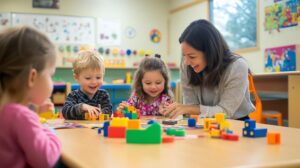
Smaller group sizes, flexible activities, and caring educators create the conditions where children actually practice the soft skills they will rely on for the rest of their lives. They learn to take turns. They learn to lose gracefully and win kindly. They learn what it feels like to belong to a group outside of their family. These are not minor outcomes. The Harvard Graduate School of Education has highlighted social-emotional learning as one of the strongest predictors of long-term success, both in school and beyond.
For children attending afterschool in Hoboken, particularly in vibrant, mixed communities like those around the Hudson and Monroe neighborhoods, this exposure to diverse friendships and collaborative play is especially rich. Children grow through connection, and afterschool gives them the time and space to build it.
Academic Support That Goes Beyond Homework
Yes, homework gets done. But the best afterschool programs do not stop there. They reinforce learning in ways that feel natural and engaging rather than like an extension of the school day. A child who struggled with a math concept in class gets a second opportunity to approach it differently, without pressure, without judgment.
Reading corners, science experiments, creative projects, and guided discussions all extend learning in ways that complement what happens in the classroom. Quality afterschool educators are trained to spot where a child is thriving and where they need a gentle nudge. They communicate with parents regularly, keeping families informed and involved. For busy Hoboken families juggling demanding schedules between Hudson Street and Monroe Street, this kind of consistent support is invaluable.
According to the Child Care Aware of America, children who participate in structured afterschool programs are more likely to complete high school and pursue higher education. That pipeline starts here, in the afternoons, in the small moments of encouragement and curiosity that quality programs make possible.
Building Independence, One Afternoon at a Time
There is something else that good afterschool programs quietly accomplish. They help children become more independent. Away from parents, navigating their own friendships, making small decisions throughout the afternoon, children in afterschool settings gradually build a sense of self-reliance that matters enormously as they grow.
This is not about pushing children before they are ready. It is about giving them a safe environment where small challenges are normal, where trying something new is encouraged, and where it is perfectly fine to get something wrong and try again. That is what a nurturing afterschool environment looks like in practice. Children come home a little more confident than when they left. Over time, those small gains add up to something significant.
Choosing the Right Afterschool Program for Your Child
Not all afterschool programs are created equal. When evaluating options, look for programs with qualified, consistent educators who genuinely know the children in their care. Look for clear communication with families. Look for a balance between structured learning and unstructured play. And look for a philosophy that sees your child as a whole person, not just a student who needs to finish their reading log.
At The Step by Step School, our afterschool program serves children from 3 to 13 years old across our two Hoboken locations on Hudson and Monroe Street. We design every afternoon with intention — supporting academic growth, nurturing social skills, and making sure every child feels genuinely seen and valued.
Your child’s future is not just being shaped in the classroom. It is being shaped every afternoon. Make those hours count.
Schedule a tour at our Hudson or Monroe Street location today and see firsthand what a great afterschool experience looks like. Contact us here — we would love to meet your family.
Frequently Asked Questions About Afterschool Programs
What age groups benefit most from afterschool programs? Afterschool programs benefit children across a wide age range, typically from early childhood through early adolescence. For younger children aged 3 to 6, afterschool provides safe, structured care during a critical developmental window where social skills and early academic habits are forming. For older children aged 7 to 13, afterschool programs offer academic reinforcement, mentorship, and a sense of community that supports the more complex social and emotional landscape of the middle years. At The Step by Step School, our afterschool program is designed for children aged 3 to 13, with activities and support tailored to each stage of development.
How does an afterschool program support my child’s academic performance? A quality afterschool program does more than help children complete homework. It reinforces classroom learning through hands-on activities, reading enrichment, and guided projects that make concepts stick in a low-pressure environment. Afterschool educators can identify gaps in understanding and offer additional support before those gaps become bigger challenges. Studies from the Afterschool Alliance show that students in quality afterschool programs show measurable improvements in academic attitude, behavior in school, and overall performance. Consistent academic support during the afterschool hours builds habits and confidence that carry forward throughout a child’s education.
What should I look for when choosing an afterschool program in Hoboken? When selecting an afterschool program in Hoboken, prioritize programs with trained, experienced educators who maintain consistency — meaning your child works with the same trusted adults regularly, not a rotating cast of unfamiliar faces. Look for clear and frequent communication with parents, a structured but flexible daily schedule, and a philosophy that supports the whole child rather than focusing purely on academic tasks. Location matters too. Families near Hudson Street and Monroe Street in Hoboken benefit from programs that are conveniently placed within the community. Visiting in person, asking questions, and observing the environment before enrolling is always worthwhile.
How is afterschool different from regular daycare? Afterschool programs are specifically designed for school-age children and operate during the hours after the school day ends, typically from early afternoon until early evening. Unlike daycare, which primarily focuses on care and supervision for younger children, afterschool programs blend academic support, enrichment activities, and social development for children who are already in formal schooling. The curriculum in a quality afterschool setting is intentionally designed to complement the school day, extending learning in engaging ways. Daycare and afterschool can work together as part of a broader childcare strategy, but they serve distinct purposes at different stages of a child’s life.
How do afterschool programs support social and emotional development? Afterschool settings are uniquely positioned to support social and emotional growth because they offer something the traditional classroom often cannot — time and space for children to practice real-world social skills in a lower-stakes environment. Children in afterschool programs regularly navigate friendships, group projects, disagreements, and new experiences, all with the guidance of caring educators nearby. This builds emotional vocabulary, empathy, and resilience over time. Research in social-emotional learning consistently links these skills to better outcomes in school, stronger relationships, and greater wellbeing in adulthood. A thoughtful afterschool program treats this aspect of development as just as important as any academic goal.