For many parents, one of the biggest questions about Daycare is simple: what does a normal day look like for a young child? Understanding the daily routine can help parents feel confident about their decision. A well-structured Daycare schedule balances learning, play, rest, and social interaction. Each activity supports children’s development while creating a predictable and comforting environment. When children know what to expect, they feel secure and ready to explore.
Parents in areas like Hudson and Monroe in Hoboken often look for Daycare programs that provide both nurturing care and meaningful early learning experiences. A thoughtful routine allows children to develop independence while still receiving guidance from caring teachers. From morning drop-off to afternoon pick-up, every part of the day is designed to support growth. Let’s take a closer look at what a typical Daycare day might include for young children.
Why Structure Matters in Daycare
Children thrive when they follow a consistent routine. A structured Daycare schedule helps them understand what comes next and reduces stress or confusion. When children move through predictable activities, they feel safe and more willing to participate.
Daily routines also support developmental skills such as listening, cooperation, and independence. According to the American Academy of Pediatrics, consistent routines in early childhood environments support emotional stability and learning readiness. In a well-organized Daycare, every activity has a purpose, whether it encourages creativity, movement, or communication.
Morning Arrival and Warm Welcome
The Daycare day usually begins with a warm welcome. Teachers greet children and help them settle into the classroom environment. This moment is important because it helps children transition from home to school.
Morning arrival also gives teachers time to connect with parents. Caregivers may share updates about sleep, mood, or special needs for the day. In many Daycare programs near Hudson and Monroe in Hoboken, children start the day with simple free-play activities while everyone arrives.
This relaxed start allows children to explore toys, interact with friends, and feel comfortable before structured learning begins.
Circle Time and Group Activities
After morning arrival, most Daycare programs begin group activities such as circle time. During this period, children gather together to sing songs, listen to stories, and discuss simple topics. Circle time helps children develop listening skills and learn how to participate in a group setting.
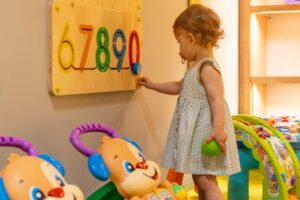
Teachers may introduce letters, numbers, or seasonal themes during this time. These lessons are simple and interactive so children remain engaged. Many Daycare classrooms use music and storytelling to make learning enjoyable.
The National Association for the Education of Young Children recommends interactive learning activities because they encourage curiosity and creativity in early childhood education.
Learning Through Play
Play is one of the most important parts of a Daycare day. Young children learn best when they explore through hands-on activities. In a high-quality Daycare, play is not random. It is carefully designed to support social, emotional, and cognitive development.
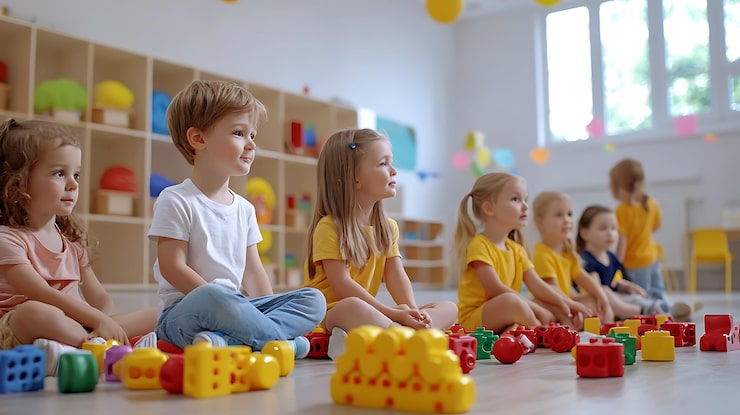
Children might build with blocks, paint pictures, or participate in imaginative games. These activities strengthen problem-solving skills and creativity. Teachers observe and guide children during play so learning happens naturally.
Play-based learning also helps children build friendships. Working together on activities teaches cooperation, sharing, and communication.
Snack Time and Social Interaction
Healthy snacks are another important part of a Daycare routine. Snack time is not only about nutrition. It also helps children practice social skills and independence.
Children may learn to sit together, share space, and follow simple mealtime routines. Teachers encourage polite behavior and conversation during these moments. These everyday interactions help children build confidence and communication skills.
A well-organized Daycare also ensures snacks meet proper nutritional guidelines to support healthy growth.
Outdoor Play and Physical Activity
Outdoor time is a favorite part of the Daycare schedule for many children. Fresh air and movement support physical development and improve mood. Running, climbing, and playing games help strengthen muscles and coordination.
Outdoor activities also encourage exploration and curiosity about the natural world. Children might observe plants, play with sand, or participate in group games. Many Daycare centers in Hudson and Monroe in Hoboken include safe outdoor spaces where children can move freely.
Regular physical activity supports both health and learning. Children who stay active often return to the classroom more focused and relaxed.
Quiet Time and Rest
Young children need rest during the day, especially after active play and learning. A good Daycare schedule includes quiet time or nap time to help children recharge. This period may include soft music, quiet reading, or sleeping on comfortable mats.
Rest helps children process what they have learned and maintain emotional balance. Teachers supervise the environment carefully to ensure children feel calm and safe.
Even children who do not nap benefit from quiet activities that allow them to relax before continuing the day.
Afternoon Learning and Creative Activities
After rest time, Daycare programs often introduce creative activities such as art, puzzles, or sensory play. These experiences help children express themselves while building fine motor skills.
Teachers may also revisit lessons from earlier in the day. Repetition helps children remember new concepts and gain confidence in their abilities. In many Daycare classrooms, afternoons focus on creative exploration rather than structured instruction.
This balance between guidance and independence supports healthy learning habits.
Preparing for Pick-Up and Reflection
Toward the end of the Daycare day, teachers help children transition back to home routines. This time may include reading stories, playing quiet games, or reflecting on what the children learned during the day.
Teachers often share updates with parents during pick-up. These conversations help families stay connected to their child’s experiences in Daycare. For parents in Hudson and Monroe in Hoboken, this communication builds trust and strengthens the partnership between home and school.
Children leave the Daycare environment feeling proud of what they accomplished and excited to return.
Final Thoughts
A typical Daycare day is carefully designed to support every part of a child’s development. From structured learning to creative play and rest, each moment helps children build skills that prepare them for future learning.
For families in Hudson or Monroe in Hoboken, finding a nurturing Daycare environment can make a lasting difference in a child’s early years. If you would like to see how our classrooms support learning, exploration, and friendship, we invite you to visit our center. Schedule a tour today and discover how our Daycare programs help young children grow with confidence.
Frequently Asked Questions
1. What age groups usually attend Daycare?
Most Daycare programs serve children from infancy through preschool age. Some centers also offer programs for toddlers and pre-kindergarten students. Each Daycare classroom is designed to match the developmental needs of its specific age group.
2. How long is a typical Daycare day?
A typical Daycare day can range from six to ten hours depending on the program and family needs. Within that time, children participate in learning activities, playtime, meals, and rest periods.
3. Do children learn academic skills in Daycare?
Yes, a quality Daycare program introduces early academic concepts through play. Children may learn basic numbers, letters, shapes, and language skills through stories, songs, and hands-on activities.
4. How does Daycare support social development?
Daycare allows children to interact with peers every day. Through group activities and play, children learn sharing, cooperation, and communication. These experiences are essential for social development.
5. What should parents look for in a good Daycare routine?
Parents should look for a Daycare schedule that balances learning, play, meals, and rest. A well-structured routine helps children feel secure and supports healthy development throughout the day.