
The early years of childhood are a critical period for growth and learning. During this time, children begin forming emotional connections, developing thinking skills, and understanding how the world works. A supportive Daycare environment can play a major role in this process. Through structured activities, guided play, and meaningful interactions, children develop both emotional confidence and cognitive abilities.
For many parents, choosing the right Daycare is about more than convenience. It is about finding a place where children feel safe, supported, and encouraged to explore. Families in Hudson and Monroe in Hoboken often look for childcare programs that nurture development while maintaining a warm and caring atmosphere. When designed thoughtfully, a quality Daycare program helps children grow socially, emotionally, and intellectually.
The Role of Daycare in Early Development
Early childhood development includes two key areas: emotional growth and cognitive learning. Emotional development helps children understand feelings and relationships. Cognitive development focuses on thinking skills such as memory, problem-solving, and curiosity. A well-structured Daycare program supports both areas through daily routines and engaging activities.
Research from the American Academy of Pediatrics shows that early learning environments that include play, communication, and supportive relationships contribute strongly to a child’s development. In a nurturing Daycare, children receive consistent guidance from caregivers while interacting with peers. These experiences help them learn how to express emotions and explore ideas.
Children also benefit from observing others. Watching classmates solve problems or participate in group activities encourages learning through imitation and curiosity.
How Daycare Builds Emotional Confidence
A supportive Daycare environment helps children feel secure and valued. Teachers create routines that help children understand expectations and build trust. When children feel emotionally safe, they are more willing to participate in new activities and express themselves.
Daily interactions with caregivers also strengthen emotional awareness. Teachers guide children through moments of frustration, excitement, or disappointment. These everyday situations help children learn how to manage emotions and develop resilience.
A strong Daycare program focuses on positive reinforcement rather than punishment. Encouragement and gentle guidance help children build self-confidence and emotional stability.
Learning Social Skills Through Interaction
Social interaction is another important part of emotional development. In a Daycare setting, children practice sharing, cooperating, and communicating with peers. These experiences teach children how to form relationships and respect others.
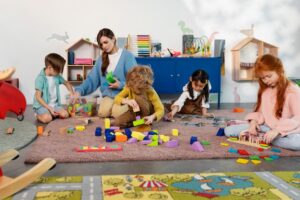
Group activities such as storytelling, music, and cooperative games encourage participation and teamwork. Teachers guide these activities so every child feels included. A well-managed Daycare classroom creates opportunities for children to build friendships and learn from each other.
Parents in Hudson and Monroe in Hoboken often notice improvements in their child’s social confidence after attending Daycare regularly.
Supporting Cognitive Growth Through Play
Play is one of the most powerful tools for cognitive development. In a quality Daycare, play-based learning encourages children to explore ideas and solve problems. Activities such as puzzles, building blocks, and creative art stimulate thinking skills.
According to the National Association for the Education of Young Children, hands-on learning experiences support brain development and strengthen memory. Children who participate in these activities learn to experiment, ask questions, and find solutions.
A balanced Daycare program combines structured lessons with free exploration. This approach allows children to discover new interests while building important thinking skills.
Language and Communication Development
Language development is closely connected to cognitive growth. In a Daycare environment, children hear and use language throughout the day. Conversations with teachers and peers help expand vocabulary and strengthen communication skills.
Storytime, songs, and group discussions are common activities in many Daycare programs. These experiences encourage children to listen carefully and express their ideas clearly. Over time, children become more confident speaking in group settings.
Strong communication skills also support learning in other areas, including reading readiness and problem-solving.
Encouraging Curiosity and Exploration
Curiosity is the foundation of learning. A stimulating Daycare environment encourages children to ask questions and explore new ideas. Teachers introduce activities that spark interest while allowing children to experiment freely.
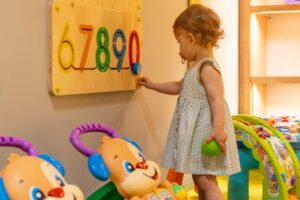
For example, children might explore textures during sensory play or observe simple science experiments. These activities help children understand cause and effect. A creative Daycare classroom allows children to discover the joy of learning through exploration.
Families living near Hudson and Monroe in Hoboken often value Daycare programs that provide engaging learning environments with diverse activities.
Building Routine and Independence
A structured routine is another way Daycare supports development. Children learn to follow schedules that include learning time, meals, play, and rest. Predictable routines help children feel secure and develop self-discipline.
Daycare teachers also encourage independence by guiding children through small responsibilities. Tasks like cleaning up toys or preparing for snack time help children build confidence. These experiences teach children that they can manage simple tasks on their own.
Over time, this independence supports both emotional strength and cognitive growth.
The Long-Term Benefits of Daycare
Children who attend high-quality Daycare programs often develop strong learning habits early in life. They become comfortable participating in group settings and following structured routines. These skills make the transition to preschool and kindergarten much easier.
Emotional resilience, curiosity, and communication skills developed in Daycare continue to support children throughout their education. These early experiences help create a foundation for lifelong learning.
For parents in Hudson and Monroe in Hoboken, choosing a nurturing Daycare program can make a lasting difference in their child’s development.
Final Thoughts
A well-designed Daycare environment does more than provide supervision. It supports emotional confidence, social skills, and cognitive development through meaningful daily experiences. Children learn through play, interaction, and exploration in ways that prepare them for future learning.
If you are searching for a supportive Daycare near Hudson or Monroe in Hoboken, we invite you to learn more about our programs. Our educators focus on creating a warm and engaging environment where children can grow emotionally and intellectually. Contact us today to schedule a tour and discover how our Daycare community supports every stage of early development.
Frequently Asked Questions
1. How does Daycare help emotional development?
A nurturing Daycare environment helps children recognize and manage their emotions. Through daily interaction with teachers and peers, children learn empathy, patience, and confidence.
2. Does Daycare improve cognitive development?
Yes, a structured Daycare program includes activities that stimulate thinking and problem-solving. Play-based learning, puzzles, and creative projects help strengthen cognitive skills.
3. Can Daycare help my child communicate better?
Children in Daycare practice language skills through conversation, storytelling, and group activities. These experiences help expand vocabulary and improve communication abilities.
4. What activities support learning in Daycare?
A quality Daycare program includes activities such as art, music, reading, sensory play, and outdoor exploration. These activities support both emotional and cognitive development.
5. How do I know if a Daycare program supports development?
Parents should look for a Daycare that provides structured routines, trained educators, and engaging learning activities. Visiting the center and observing interactions can help determine if the program supports healthy development.